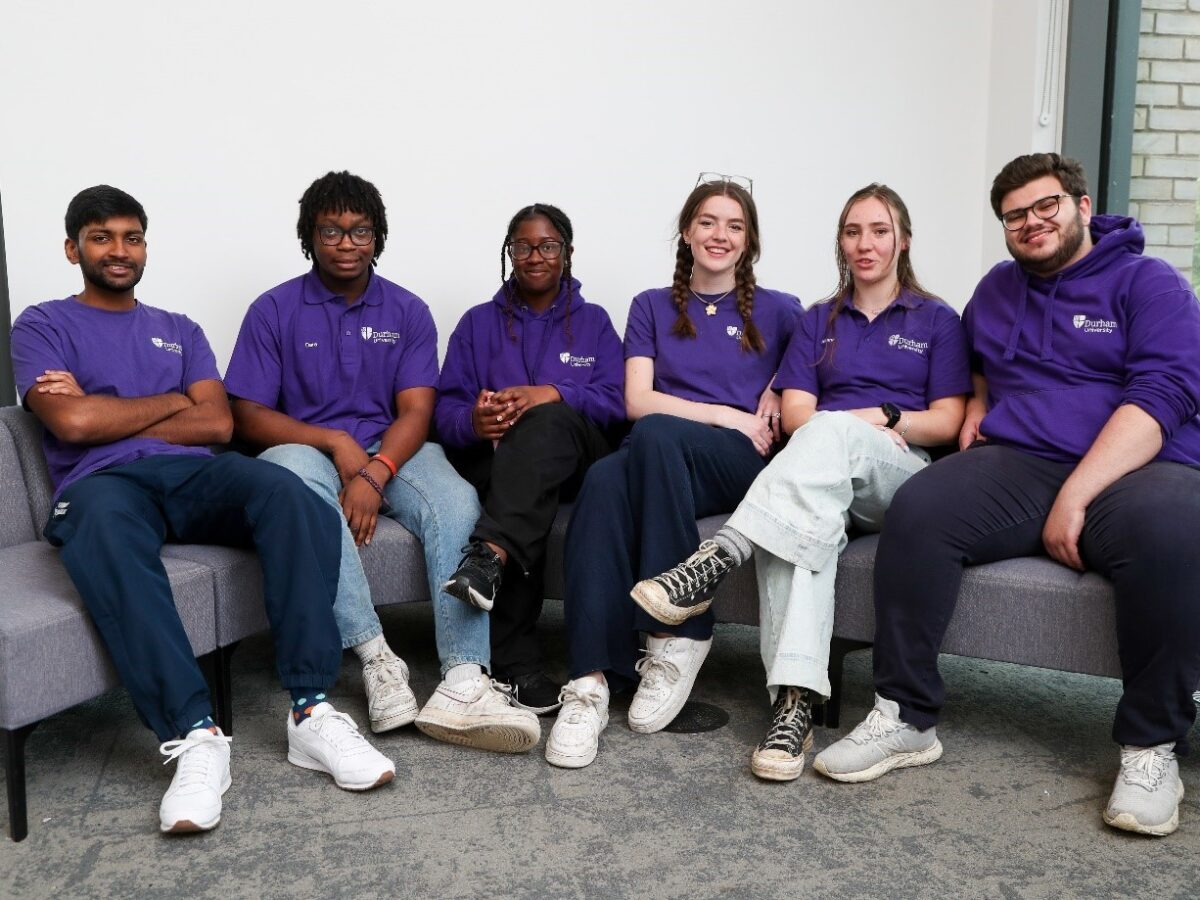
Starting postgraduate studies can feel like diving into the unknown. I still remember the nerves I had when I first began, which is why I eagerly jumped at the opportunity to become a university ambassador. I wanted to help others navigate this transition and find their footing.
Being an ambassador has been an incredible experience. It’s allowed me to connect with potential students, whether I’m guiding them around campus, sharing what life at Durham is really like during open days, or answering their burning questions in online Q&A sessions.
Exploring the city, campus, and colleges
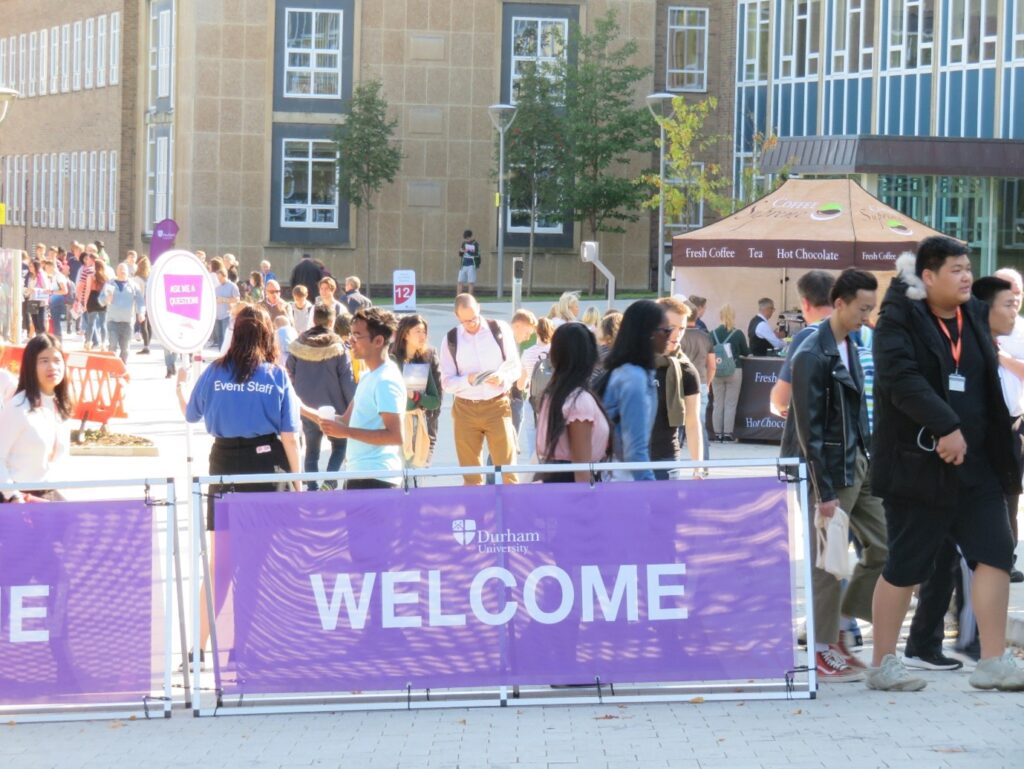
One of the best parts of being an ambassador is leading tours during open days. I get to show off the city, the campus, and the colleges—essentially all the places that make studying here such a unique experience.
Interestingly, I’ve also used this role as an opportunity to explore the city more myself. Leading these tours has taught me more than I ever expected—I’ve learned fascinating details about the history of buildings and the stories behind various landmarks. It’s a win-win for everyone, as we all get to uncover more of what makes this beautiful, historic city so special.
Connecting through online Q&A sessions
Not everyone can make it to campus, especially those who are halfway across the world or balancing a full-time job. That’s where online Q&A sessions come in.
These are some of my favourite events to host because they allow me to connect with students in a more personal way. It’s like having a friendly chat—students can ask anything on their minds, from how the course is structured to what it’s really like living away from home. We cover from academic side of things, like what the workload is actually like, to the practical stuff, like finding accommodation and getting involved in campus life.
Other opportunities
I’ve also had the chance to take on various other interesting roles, such as:
Open Days and Post-offer Visit Days: Presenting, guiding, staffing stands—basically, anything that helps showcase what our university has to offer.
Recruitment Events: Assisting in key moments like Confirmation and Clearing.
Balancing study with part time work
This is a casual job, so I can sign up for events whenever I have the time, and I can skip them when I’m too busy. There’s no pressure, just the flexibility to get involved when it suits me.
Discover more
Find out more about part time work at Durham university in Mia’s video
Download our latest prospectus and college guide here.
As I live in Newcastle, and commute to the university, I wake up a bit earlier than the rest of my classmates. I don’t mind the commute, as the walk from Durham Railway Station to the School of Education is beautiful, and it helps me get my steps in! In the early hours, when the city is still fairly empty, I really appreciate Durham’s beauty, and how lucky I am. I’ll make sure to pack a tea or coffee with me, to keep me warm on my walk. Sometimes I review my seminar notes on the train, just to feel extra prepared.
Morning: Lecture and study time
My first class of the day is a lecture for my core module, Design and Methods in Education. This module has really given me the confidence to prepare me for my dissertation, as all the examples and practices we speak about are highly relevant. It also helped me brushed up on some of my research design skills, that I haven’t used as much since my undergrad.
Once the lecture is over, I either see if there are any empty classrooms in the School of Education where I could work, or head to the Teaching & Learning Centre just across the road. I really like studying up on the top floor in the individual study pods… plus the hot water tap is another bonus. I’ll either do the seminar reading in preparation for my next class, or work on any assignments coming up.
Sometimes my friends and I stick together after the lecture and have a group study session. It’s always nice to speak to other people about the work you’re doing and share progress. Likewise, our lecturer is always happy to take any questions after the session, so it’s a nice opportunity to have a smaller group of people speaking to him.
Afternoon: Lunch and stroll
Once I met my goals and feel happy with the progress I made, I pack up my things. Depending on how I’m feeling, I sometimes get lunch from Zing Kitchen, located in the Teaching & Learning Centre. They serve hot meals, with some of the best jacket potatoes I’ve ever had. I also love the mac and cheese from there.
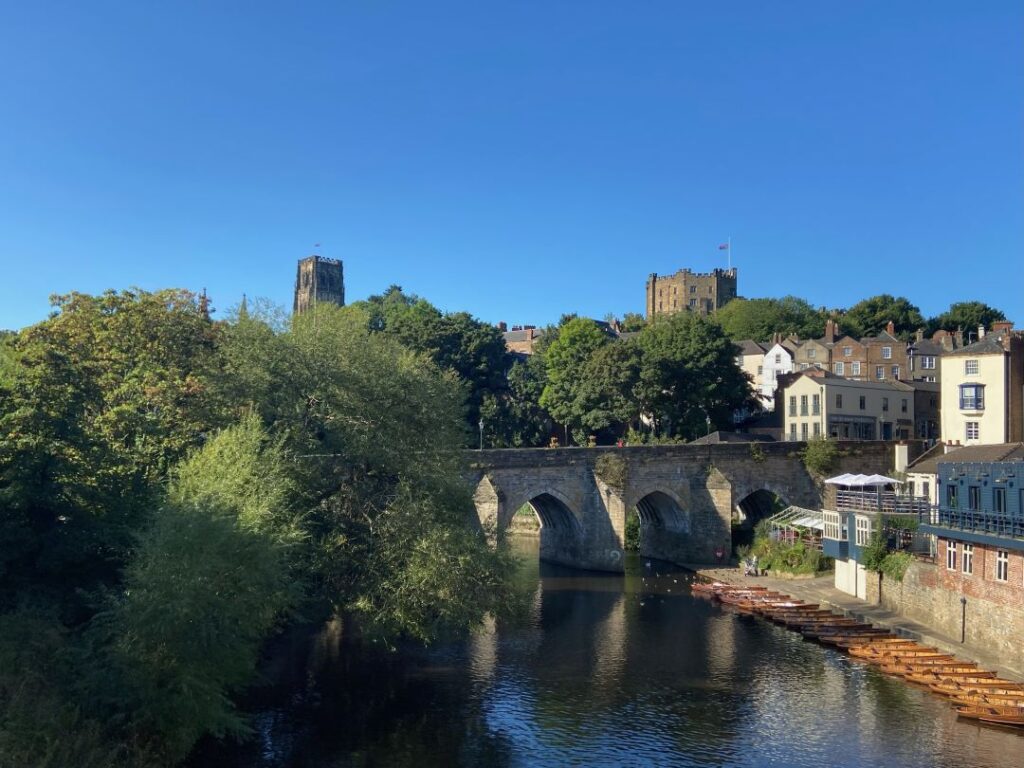
After lunch I’ll slowly head back to the station, but I often enjoy taking a longer route along the River Wear to clear my mind and disconnect. I find that after looking at a screen for too long, my brain gets fuzzy, so taking a moment to just enjoy the surrounding really helps.
A stroll by the river
Evening: Home and logging out
As I live in Newcastle, I will head back home around 4/5pm to unwind for the day and prepare myself for the next. I check my calendar to see what classes I may have the following day and make sure I have the right books ready to go. I prefer doing everything the night before and having more time to sleep in. I’ll open my laptop again to see if there are any emails/notifications, before logging out of “school mode” for the evening. I love cooking with my sister and just chatting to her about my day, what I did at uni, and how her day was.
I am very lucky, as Durham University allowed me to transfer half of my module credits from my PGCE towards my MA. Therefore, I don’t have to redo the credits that I completed last year. It definitely helps with the workload, and it allows me to work as a supply-teacher part-time. Regardless of this, the flexibility of the MA program lets me manage my time effectively, and I’m able to balance both my studies and personal life.
Final thoughts
I would suggest you definitely get into a routine and try to stick to it. It is so rewarding seeing the progress you make into your studies, but like they say, nothing good comes too easy! Make sure you follow your schedule, connect with your peers and teachers, and most of all, enjoy it all!
Throughout my time studying History here at Durham, I’ve felt privileged to be able to engage with a multitude of vast, intertwining, and – often unassuming – connections centred on exchanges of people, objects, and ideas. In both my BA and MA programmes, I’ve appreciated global historical topics at every turn, whether tracking the nuanced developments of prestigious heraldry across late medieval England, France, and the Low Countries, or uncovering the international contexts of historical events like the Boxer War in late-Qing China. I’ve scrutinised sources on early modern Europe’s ‘Little Ice Age’ and climate change, and I’ve explored the scholarly wilderness surrounding Africa’s wildlife conservation and its problematic nineteenth-century origins.
Stretching my thinking
Both programmes, but especially my MA, have encouraged me to stretch my thinking, connecting topical, historical themes to present-day, fruitful discussions in my seminars and coursework. Weaving together a myriad historical periods, actors and geographies, I’ve tremendously enjoyed studying History at Durham –analysing the origins of phenomena from deadly diseases to Dutch delftware and tracing their subsequent historical journeys from one location to the next.
So, what’s special about studying global history at Durham?
The History Department
The Oriental Museum
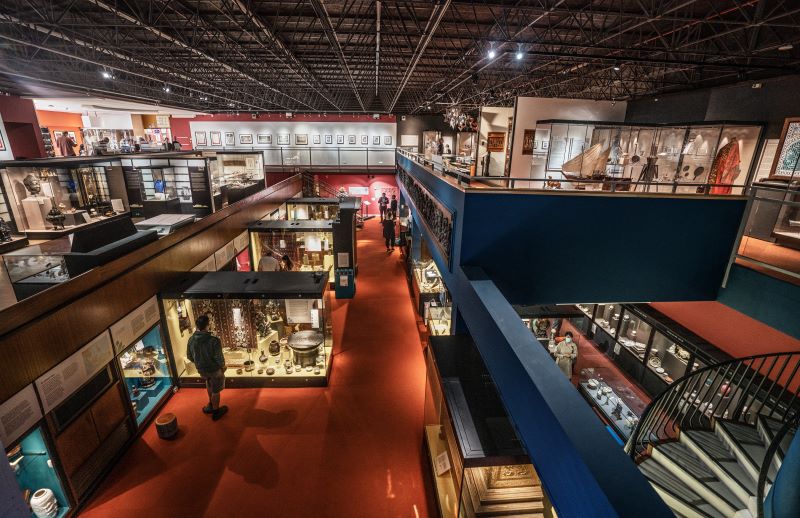
Firstly, the Oriental Museum, on the university’s doorstep, has provided me the opportunity to study a wealth of visual and material culture from pith paintings to astronomical apparatus, and other institutions such as the Institute of Medieval and Early Modern Studies have organised fascinating events for history students.
The Oriental Museum
Taking the lead
Moreover, I’ve consistently pushed myself to participate in the teaching and learning of global historical topics, from organising my own group-led seminar discussion of Sam Selvon’s The Lonely Londoners and the Windrush Scandal as part of Durham University’s Decolonising History Initiative in 2022, to assisting in the smooth running of panel discussions on complex circuits of medicines, missionaries, and migrants within the Asian Connections Workshop in my final term.
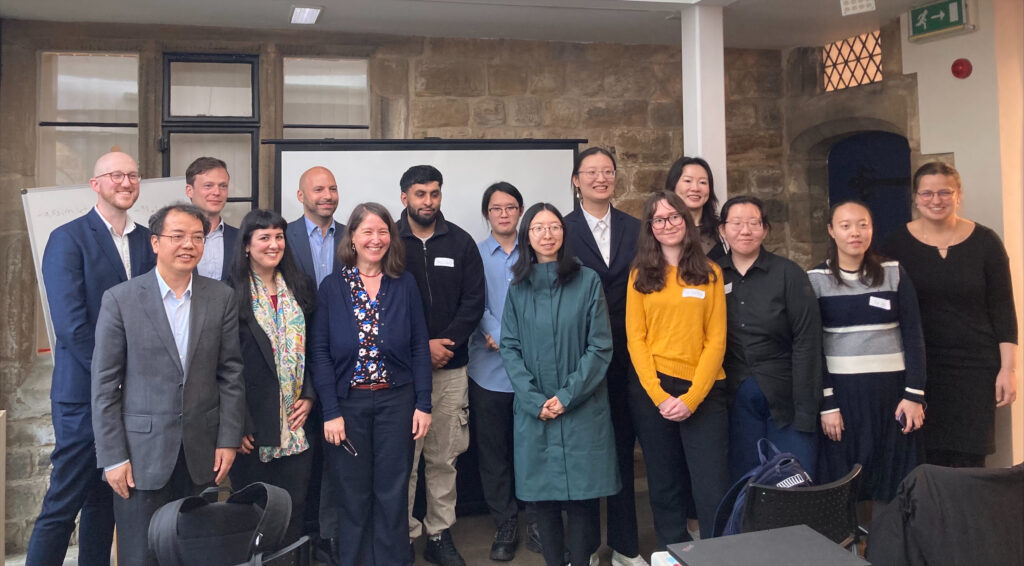
Asian Connections: Flows of People, Medicines, Ideas, and Practices’, a workshop organized by the Durham University ‘Thinking East Asia’ Research Group.
Wide variety of topics and modules to choose from
These many enriching opportunities have been invaluable, supplementing my core learning and skills, and encouraging me to be independent and original in my thought and study. I’ve also always sought to take advantage of the History Department’s excellent teaching and expert insights by selecting an array of global topics, ranging from modules which covered the histories of British-occupied Myanmar and Weimar Germany, to modules which specifically brought separate, fascinating stories of different places and peoples together…
For example, in the final year of my BA, I studied the Mughal Empire and the Qing Dynasty respectively within a single module, Empires and States in Early Modern Asia, which allowed me to discover a variety of state-building techniques from mobile courts to imperial gardens to complex, authoritative genealogies. I developed my analytical skills most strongly through contrasting how Inner Asian legacies, post-Mongol Empire, manifested in India and China, dissecting Asian rulers’ imperial authority, political organisation, and multi-faceted identities. Not only did this allow me to appreciate the histories of both empires, but it enabled me to naturally access wider historical debates, a skill I’ve found indispensable at MA level.
Some of the text books I have used during my studies
Learning more about the world
More recently, The City in History MA module has enabled me to walk the streets of classical Constantinople, late medieval London, early modern Delhi, and colonial Khartoum, drawing comparative points between human experiences within urban history. Placing one construction – the city – in a global framework has likewise enriched my experience of studying different themes such as gender, state ritual, and ideology by evaluating multiple historical viewpoints and intersecting with an array of historiographical, sociological, and anthropological approaches.
Ancient map of Paris
Critical engagement with historical sources
Through studying the MA core module, Themes, Readings and Sources, I was able to further delve into wider historiographical questions such as archives’ nature and purpose for historians from the nineteenth century to present-day, discussing a variety of primary sources such as oral testimonies following the British Empire’s atrocities in Kenya in the 1950s. Adopting a global lens enabled me to analyse European, African, and Asian archives’ own subjective inclusions and omissions, explaining missing subaltern voices and more deeply interrogating why and how historical evidence is recorded. In summary, my History MA – especially looking to my modules with a global perspective – has fuelled and rewarded my critical engagement with all historical sources, schools, and scholars.
I have thoroughly enjoyed studying my History BA and MA here at Durham University and will continue thinking about the connections between global historical themes, events, and perspectives as I move forward into the next chapter of my life.
The most impactful experience of my 4 years at Durham university has been my Postgraduate Placement at the Centre for Research into Violence and Abuse (CRiVA). I worked with a specialist service known as the Rape and Sexual Abuse Counseling Centre (RSACC) to review their outreach strategies and suggest improvements to better serve marginalsied women. It involved analysing demographic data and annual reports, comparing it with census reports from Durham and Darlington, and examining the practices of similar counselling centres both in the UK and the US. My goal was to contribute meaningfully to their mission of supporting survivors of sexual violence, particularly those from marginalized communities. Reflecting on my journey now, I realise how transformative this experience has been, both professionally and personally.
During my research, I reviewed the media and website pages of several counselling services and was really impressed by their innovative efforts to help women of colour seeking refuge from abuse. RSASS Bradford stood out with its dedication to accessibility for women with disabilities. Their website had dictionaries to explain technical terms, making it easier for everyone, regardless of their educational background, to engage with their content. This approach to inclusivity ensured that no one felt excluded because of language barriers or complex phrases. R.A.I.N.N in the US was another standout. Their social media was a model of how to engage with diverse audiences. They tailored content specifically to their target demographics, using the languages spoken by their audiences. This eliminated the need for translators and made their resources immediately accessible. Discovering innovative strategies and successful practices from organisations filled me with excitement. I was inspired by the idea of bringing these concepts to RSACC to enhance its outreach and support services. It was invigorating to see tangible examples of how other centres effectively addressed the needs of marginalised women.
One of the most positive experiences was the reception I got from my supervisors, Nicole Westmarland and Alice Nah, and the staff at RSACC. Initially, I felt a mix of excitement and apprehension, but as I got deeper into my tasks and received their support and encouragement, my confidence grew. It reaffirmed my belief that meaningful change is possible and that with the right strategies, RSACC could significantly improve its services and reach more women in need. This sense of hope was a powerful driving force throughout my research process.
Overall, I felt a deep sense of admiration and respect for organisations like the RSACC that strive to implement thoughtful and comprehensive practices. Their commitment to inclusivity, accessibility, and diversity was evident in their reception of my work and I take pride in being a part of this process.
Discover more
Feeling inspired? Visit our Sociology webpages to learn more about studying with us.
I studied professional policing at Teesside University from 2020-2023 where I graduated with a BSc first class honours degree. Once I was midway thorough second year, I started to get very passionate about research and knew that my next step would be postgraduate study. One evening in April 2023 whilst conducting research for my undergraduate dissertation I found the MSc Criminology and Criminal Justice course on the Durham University website and applied just to see what would happen. That evening, I dared to dream. Two months later whilst we were celebrating my sisters birthday I got an email and my heart skipped a beat when I saw the words “Congratulations Jagraj” and even though they say big boys don’t cry, that day I did because my dream had become a reality.
Increased Intensity
When I started my first week at Durham University it quickly became clear that the transition from undergraduate to postgraduate was going to be challenging as I was required to do more reading and preparatory activities. Creating a daily home timetable assisted me as it ensured that I had completed the set tasks prior to the lecture which was beneficial as it meant that I was not walking into the lecture in the unknown. Eventually I started making friends which has enhanced my learning experience because having classroom discussions has allowed my lens to widen as I get to acknowledge other people’s perspectives and challenge my own beliefs.
Enrolling at Ustinov College
Core Module: Criminology, Theory and Critical Issues
Initially, I had feelings of trepidation when I heard that this core module would be studied in both term one and term two as I had never studied criminology previously, I was aware that the subject is ladened with theory. But this module was well balanced as we learnt about theory which was quite fun as it showed me how criminologists have divergent views on crime which makes criminology interesting as there is a plethora of debates and themes within the discipline. This module provided ample opportunity for guest lecturers from other universities and organisations to come and give us a talk which allowed me to draw connections between theory and the wider criminal justice system.
Placement
As on this course students are given the choice to select some of their modules, I chose the placement module as I felt it would add variety to the methods of learning I receive at Durham University and allow me to obtain valuable work experience. I undertook the placement at Young People’s Engagement and Justice Service in Darlington over four weeks from February 2024 – March 2024. On this placement I shadowed members of staff to enhance my understanding of youth justice. Over the four weeks I completed the following activities:
My advice to anybody considering studying this course
If you are interested in any aspect of the criminal justice system this course is certainly for you, as you get a variety on the course which makes it so refreshing. It is well known that postgraduate study is not challenge free as at times it becomes relentless but if you keep your foot on the accelerator and keep focussed you will receive the award of a MSc in Criminology and Criminal Justice from this prestigious university which will open many more pathways in academia.
I am Nara Bueno, a Brazilian researcher from University of Goiás (UFG) and I went to Durham University as a short term PhD researcher (for 6 months). I chose Durham for many reasons, the first one was the warm contact that I had with my professor and advisor and the ease of obtaining information and guidance from the university staff. I also had the opportunity to be supervised by a professor, researcher and activist in Human Rights that I greatly admire, Professor Doctor Alice Nah, that I met previously in a Congress at my University. The other reason is because it is a renowned university worldwide, is highly recognized internationally for its research environment and has a good structure and study spaces.
The Department of Sociology, to which I was accepted, offers constant academic qualification and interaction between students, which allowed me to enjoy the best of both worlds: developing tools and knowledge that enriched the research, but also the formation of connections among students, teachers and researchers from all over the world. This interaction allows an interdisciplinary approach which, for me, was important, as it stimulates the expansion of the scientific perspective, as well as innovation and creativity in my work.
Ustinov College for postgraduate students
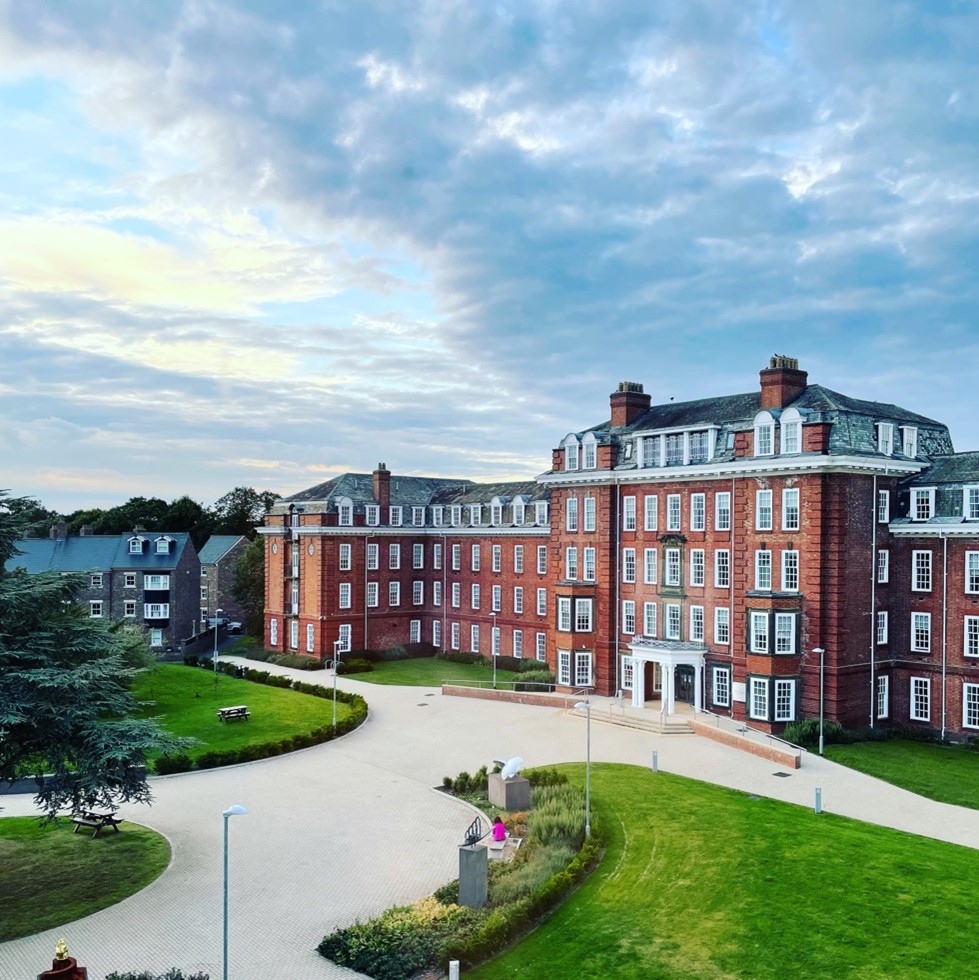
I was allocated at Ustinov College, exclusively for postgraduate students. The motto of Ustinovians is Strength through diversity. And I could experience exactly these words, because they offer activities curricular and extracurricular that allowed me to learn different points of view such as meeting colleagues from many countries and various areas of knowledge and attending academic discussions at the Seminar Room. The physical structure is amazing (such as the library, classrooms and places to study), the University also uses a software that helps a lot with the appointments (Inkpath). I loved the experience of attending the workshops, since the themes of analysis of the data, until the poetic thinking. Everything was amazing! The only thing that I suggest to change is the policy of access to the university email and other platforms, because after my short time was up, I could not have access anymore.
I highly recommend this experience! I feel like I am returning to my home university with more scientific maturity to research and connected with so many incredible people that also finds the whole world is a big community, full of multicultural beauty.
Discover more
Feeling inspired? Visit our Sociology webpages to learn more about studying with us.
Follow The Durham Student on Instagram,TikTok and YouTube to see what life is really like at Durham.
Our group, consisting of ten students from a range of Master’s programmes and our fearless leader Professor Robert Song, set off for Uppsala, Sweden.
Travelling by train takes longer, but offers much more opportunity for exploration, anecdotes, and building relationships within the team. Being able to have each meal in a different city is a flex you just can’t get when flying!
Slow and deliberate travel allows you to slowly transition through different countries, cultures, and languages, but also gives time for window-gazing and quiet reflection. We had been given a book of environmental essays around the theme of Haste to read for the journey, and had many chats about what it means to act on environmental issues with real urgency without rushing towards unjust solutions.
Three days and nine trains later, our group of eleven arrived in Uppsala. We bonded much more because of the time spent travelling, though the relief to finally arrive and take off our heavy packs was palpable! We were joined the following day by our twelfth member, Dr Simona Capisani, as well as our liaison from CEMUS, Daniel Mossberg.
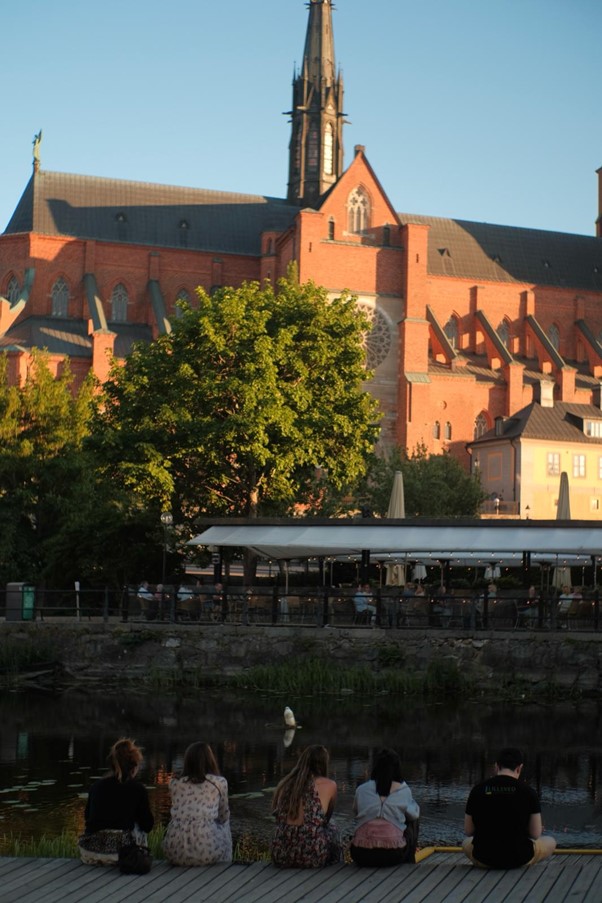
Sweden seems to be a culture where sustainability is already part of daily life. Nature parks were common and accessible, while the town was riddled with bicycles and pedestrians. Uppsala itself is a small university city with a gorgeous cathedral, not unlike Durham, and the perfect place to call home for a week.
On one of our open days, some of the group visited church ruins and runestones at Sigtuna. The high-rise buildings surrounded by rocky hills and pine woods made us consider the limits to an urban area, and the importance of compact cities to preserve natural environments.
The time spent in the student community garden was very fulfilling. Being part of the natural cycles with our hands dirtied by the earth has instilled us novices with a sense of deeper responsibility and respect for the environment. It has certainly made us keen to get something similar set up in Durham.
Not all learning took place outside in the sunshine though! There was a messy and moving session of bread-making with environmental philosopher, Ryan Carolan, which proved delicious later in the week on pizza night. During the session, we were joined online by one of the editors of Haste, Jakob Grandin, which acted as a conversation guide around urgency and climate.
The lectures on carbonscapes (a collaboration with Durham’s Professor Gavin Bridge) and cultural place-based connections from Magdalena Kuchler and Eva Rüskamp were very thought provoking, especially in the context of (post-) industrial surroundings of Durham. Identity is often tied up in the cultural significance of place, and coming from nearly a dozen countries means that we were able to share some of our personal stories of what place means to us over dinner each night.
The time has flown by, but there are lots of lessons from this trip, both academic and personal. Most powerfully of all, the overarching theme of “More haste means less speed” will propel us towards slow but deliberate actions around environmental problems in our future studies and work.
“Tack” for the adventures!
Discover more
Find out more about Postgraduate study at Durham here
I am Christopher. I am a final-year student of 2022-2024 Master of Social Work (MSW) cohort in the Department of Sociology.
Currently, I am doing my final placement in Durham County Council hospital social work team east and social care direct team. Before joining the MSW programme, I worked in healthcare public affairs advocacy, breast cancer foundation and a banking industry secretariat for five years. Apart from the social work knowledge, skills and values nurtured from this programme, my strengths are media relations development, policy advocacy, event management, and account management of different banking and healthcare projects with a devoted attitude. My favourite subject to study is theories discussing issues around adult mental health.
Based on my previous working experience, I uncovered that social work is another profession to empower and to engage clients with healthcare needs from perspectives different from biomedical model. It could be a rewarding profession if I could receive their affirmation regarding my direct work with them, other than advocating for a policy change with them.
Before I came to Durham, I completed my undergraduate degree – Bachelor of Social Sciences (Major: Politics and Public Administration; Minor: Sociology) in the University of Hong Kong in 2016. I decided to study at Durham University because the ranking of this university is the highest based on different reports among all the British universities providing the MSW programme.
What I enjoy the most about my course is when we were discussing the theoretical knowledge in relation to social constructivism, social judgemental theory, social model of disability and biomedical model, the theories provided me chances to review my past events in different stages of life course. They also provided me contrasting perspectives to perceive the world with more lens.
In the future, I hope I could be an approved mental health professional after working in adults’ services for 2-3 years and completing the postgraduate diploma of approved mental health professional subsequently.
If you’re thinking about coming to Durham to study this course, please research about the placement and evaluate if you could complete your life tasks after working hours (8:30pm-5pm) during a total of 170 working day placements because you need to write reflections re placements, to prepare portfolio regarding your practice in both placements and to complete your assignments after working hours.
Lastly, think about which stream, adults’ or children’s services, would fit for your professional development before joining this programme, so that you could maximise your learning by choosing placement institutions offering relevant services in first and final year.
Discover more
Feeling inspired? Visit our Sociology webpages to learn more about studying with us.
I’m thrilled to share that I’ve been selected for the Forbes Africa 30 Under 30 Class of 2024. This recognition symbolizes a milestone in my journey toward sustainable development, highlighting the dedication, resilience, and enthusiasm that have guided me.
At the core of my mission lies the goal of providing clean energy to underserved communities in Sierra Leone. I established Optim Energy, a forward-thinking startup that initially focused on utilizing piezoelectric devices to capture energy from the surroundings. Recently we’ve shifted our focus to implementing mini-grids with the aim of offering renewable energy solutions to off-grid communities enabling them to move from energy poverty towards sustainability.
How did the MSc in Sustainability, Energy, and Development programme help you get to where you are today?
My educational experience at Durham University as a Commonwealth Shared Scholar in the MSc Sustainability, Energy, and Development program was transformative. The program offered a comprehensive understanding of global challenges like climate change and inequality while stressing the value of local and indigenous knowledge. The interdisciplinary approach and top-notch research opportunities sharpened my skills and problem-solving abilities, significantly shaping my path.
Tell us about the award you won for a device you invented at Durham
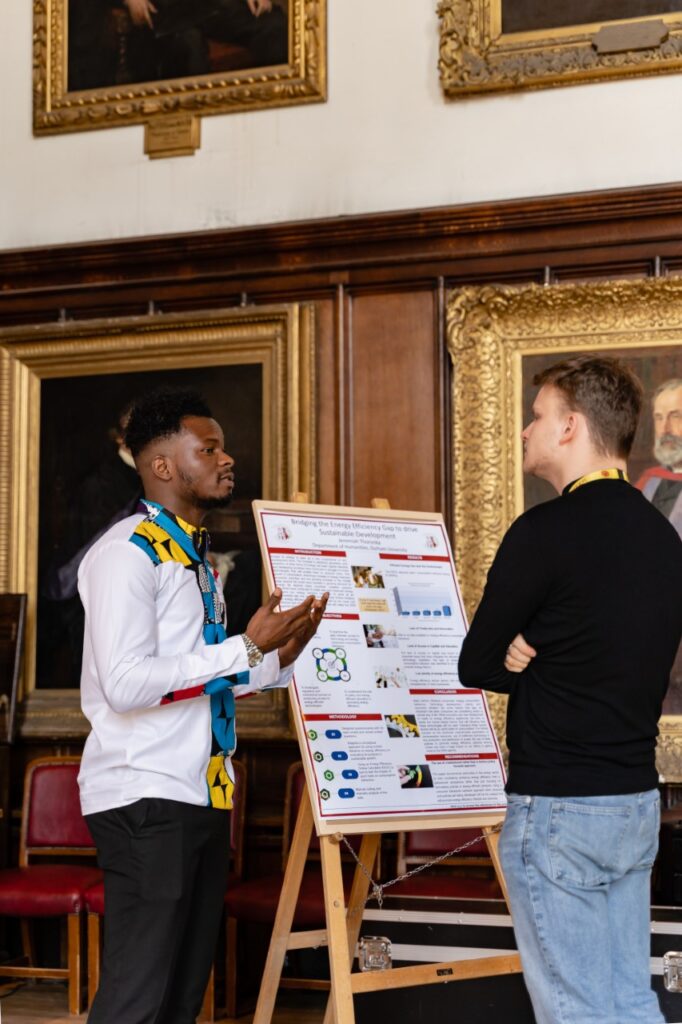
During my time studying in the Department of Anthropology, I continued to refine a device I designed to generate energy which earned me a prestigious Inaugural Global Student Prize. I worked with a list of professors from the Department of Anthropology and Energy Institute to apply for and won the Seedcorn Grant to continue working on my solution.
The assistance I received from Durham University, the Department of Anthropology, the Durham Venture School, and the collaborative atmosphere enabled me to expand the horizons of my research. This resulted in the development of a solution to address energy scarcity. After refining my research, I pivoted to utilizing a mini-grid and implemented it within my local communities in Sierra Leone creating a significant impact.
Why are you so passionate about energy, climate change and sustainability?
My rooted passion for energy, climate change, and sustainability stems from my childhood experiences in Sierra Leone. Growing up in a displacement camp, I witnessed firsthand the devastating impacts of energy poverty and climate change. These experiences sparked a desire to seek solutions to enhance living conditions and safeguard the environment motivating me to establish Optim Energy and pursue further educational and research endeavors.
How does your work positively impact communities / the world around you?
Optim Energy’s ability to access energy has enhanced living standards, improved educational opportunities, and promoted socio-economic development. Our initiatives align with the Sustainable Development Goals such as affordable and clean energy, quality education, and climate action. By empowering communities with skills and educating them about climate issues, we enable them to utilize energy access to enhance their socio-status through entrepreneurship while realizing the social value of energy.
What advice would you give to a student thinking of studying in the Department of Anthropology at Durham?
I wholeheartedly recommend it. The interdisciplinary approach, supportive faculty and staff, and real-world impact opportunities make it an exceptional place to learn and grow. It is an enabling environment that enables you to engage deeply with the material, seek collaborative opportunities, and let your passion drive you. The skills and knowledge you gain will be invaluable in any path you choose.
Being named to the Forbes Africa 30 Under 30 is a remarkable honor, but it is just one step in my ongoing journey to make a difference in whatever I do. I am grateful for the world-class education and support I have received and am excited to continue working towards a sustainable future for all, ensuring no one is left behind. Thank you for reading, and I hope my story inspires you to pursue your passions and positively impact the world.
Discover more
Feeling inspired? Visit our Anthropology webpages for more information on our undergraduate and postgraduate programmes.
I did my undergraduate in law back in India, and criminology was one of the subjects I found most interesting, which is why I chose to do an MSc in Criminology and Criminal Justice. I chose Durham University because it was one of the best universities for criminology in the UK. Also, what interested me was the way the course and specific modules were structured.
A change of pace
Although I was initially uneasy moving from a big city to a tiny, quiet town like Durham, I now find a change of pace to be quite lovely. Since then, I’ve grown to like taking leisurely strolls to and from classes while simply taking in the scenery which is also a bit refreshing. I was halfway through my first term when I finally got used to being on my own, acclimated to the temperature, and started interacting with people.
A different academic system
I found it a bit tough to adjust to the academic system at first because it is completely different. Here, we don’t have lectures every single day, and the lectures are also more like group discussions, where everyone is open to all sorts of opinions. This made me feel a bit confident in expressing my opinions in front of my peers.
The amount of reading that needed to be done was a bit daunting at first because, during my undergrad, my assessments were completely based on exams, and we didn’t have a dissertation. But here, you need to read articles and journals and provide critiques and arguments for them. I feel this let me delve much deeper into every topic that we studied.
The department
I feel the Sociology department has been very welcoming and supportive of the students, especially international students. They hold an informal social meeting every term where they check up on us and ask us about our experiences. They also make sure we tell them if there is anything they could do for us that they aren’t aware of so we can get the most out of our degree. One of the best aspects of the degree is that the professors are always willing to mentor and assist us, whether it be academically or otherwise.
Workshop at HMP DurhamFinchale PrioryRiver Wear from Kingsgate bridge
My favourite modules
The most interesting modules for me were the placement module and the Prisons, Crime and Justice module. As a part of the placement module, I get to volunteer as a mentor at the Durham Police and Crime Commissioners Office, which I feel gives me a good experience of what it’s like working with people and has also allowed me to make connections in my field. As a part of the Prisons, Crime and Justice module we had a workshop where we held group discussions with the prisoners at HMP Durham. I feel like this would be one of my most memorable experiences during my degree. This module was also a part of why I chose Durham for my master’s program.
College
Being an introvert, the collegiate system here gave me a chance to attend formal dinners and get to know people outside of my academics, making my social life a bit richer. Being away from my parents for the first time was not easy, but my college and the Student Union held a lot of cultural events for international students like me, which made me feel a little less homesick during festivals. Durham has provided me with a positive academic and social experience that I will always cherish.