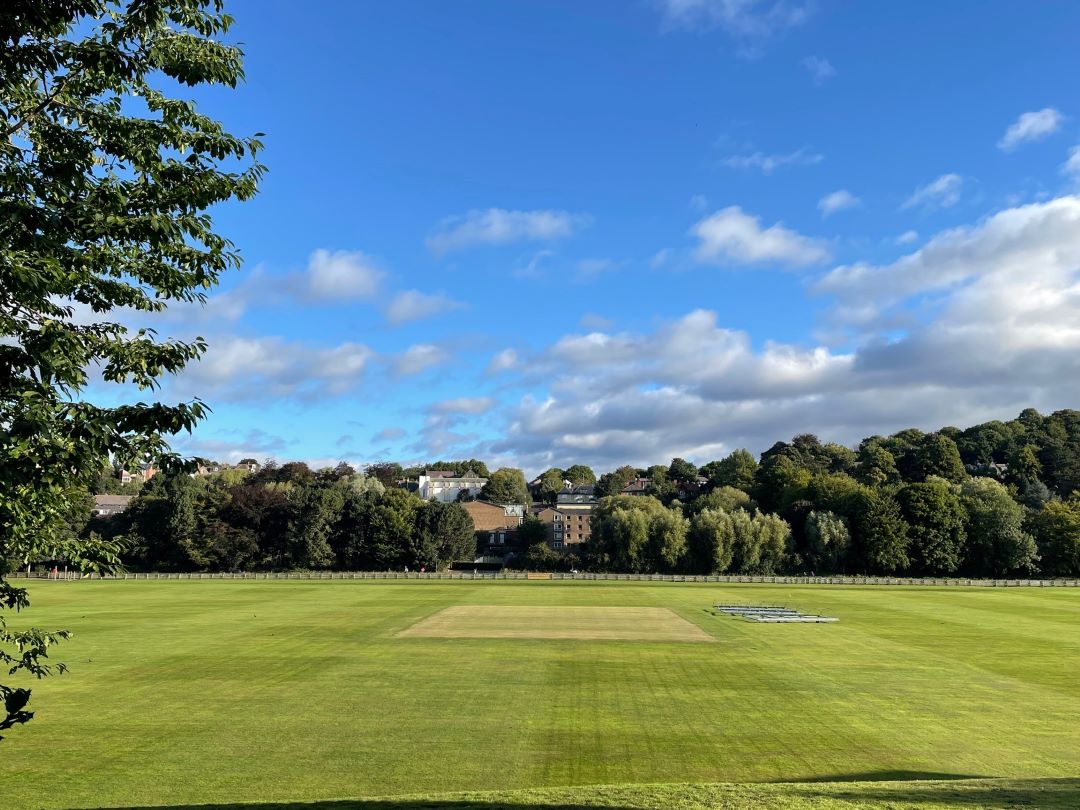
The period after exams is easily my favourite time of year in Durham. Not only is there more time to chill, but the sun is shining and there are so many events and celebrations! Societies usually pick back up again, after a quieter period for revision and exams, so it can be nice to catch up with people again and get back to rehearsals and training.
College Day
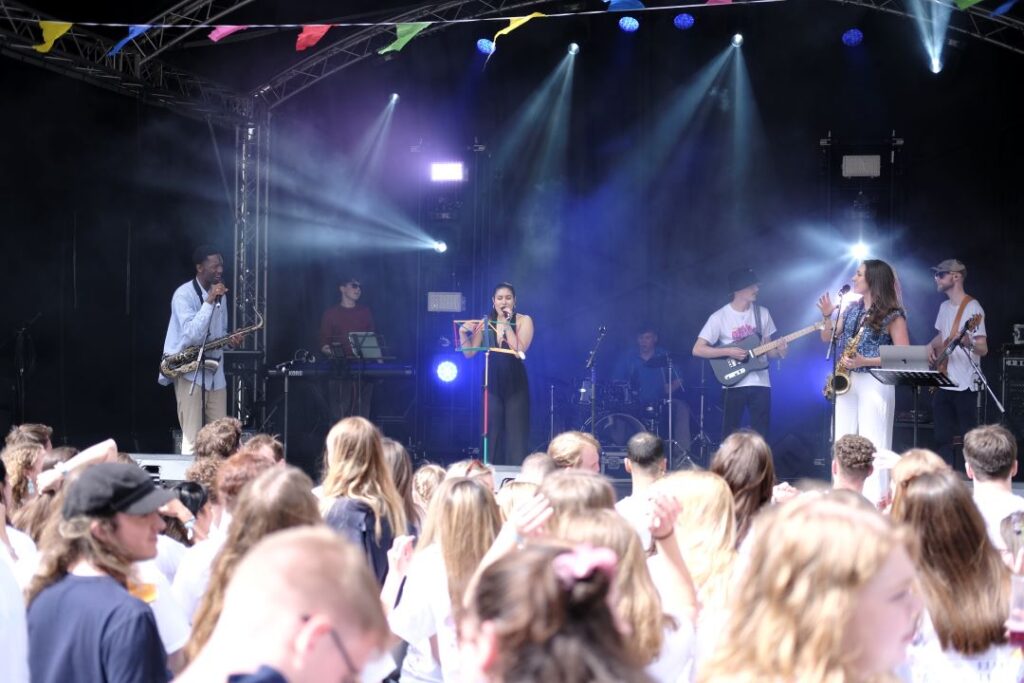
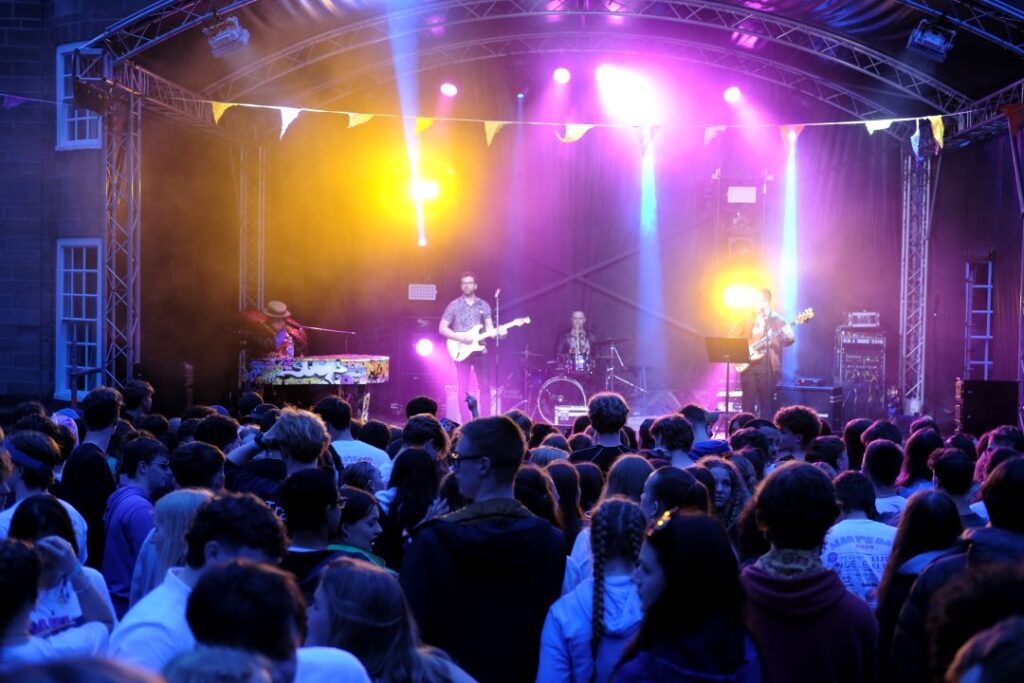
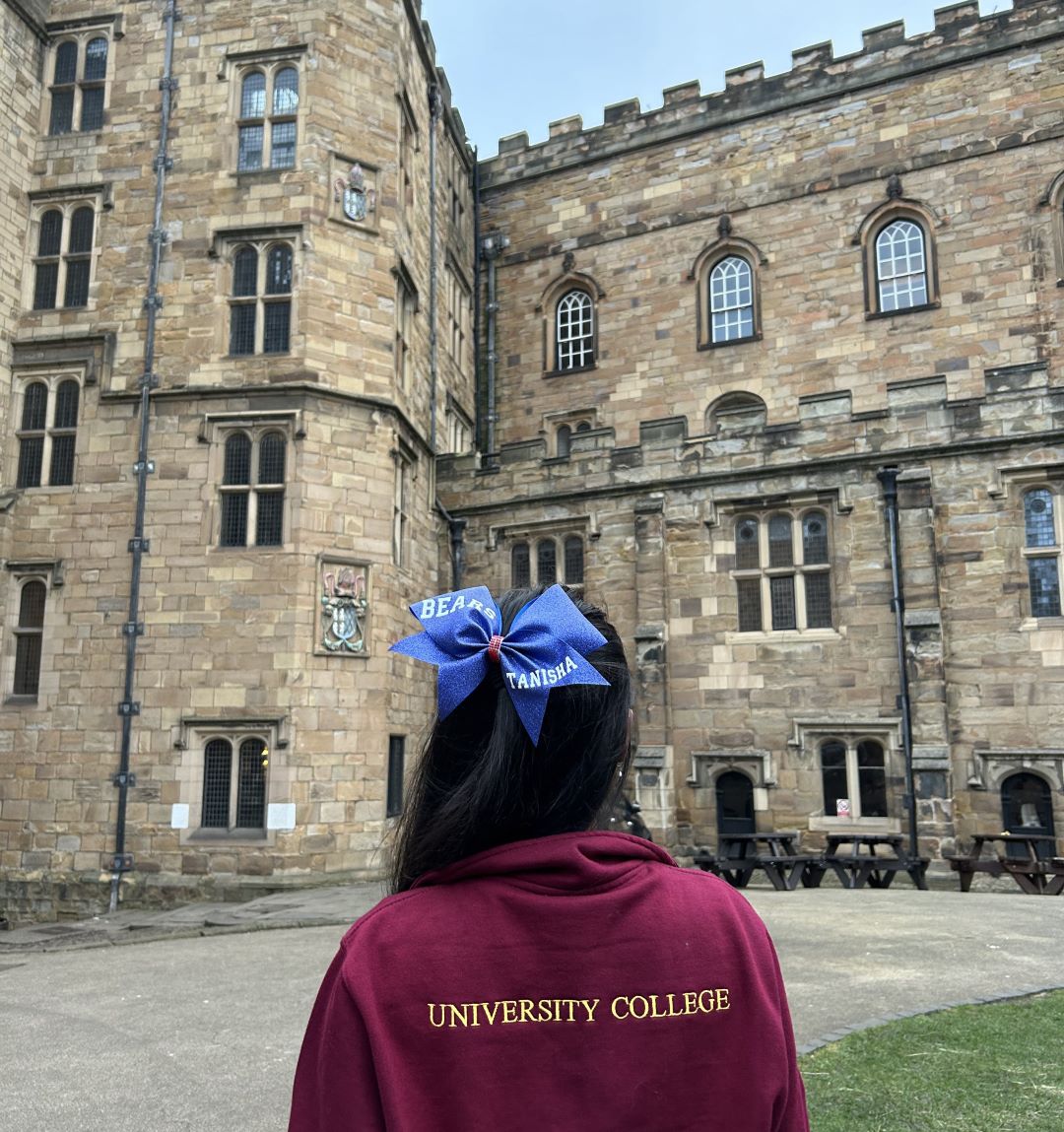
In St. Mary’s, our college day falls after exams. It’s essentially a huge celebration of college with all your college friends. It functions like a mini festival, with food, rides, games and music throughout the day. Last year, we had a Take That and Taylor Swift tribute act playing late into the night. There was an insane downpour of rain and we all stayed outside with our ponchos having so much fun. Other colleges have their celebrations on different days throughout the year, but at Mary’s it’s something we look forward to after exam season.
Summer Ball
Yet another huge event in the college calendar, summer ball is not one to miss! Each college has their own ball, unique to them in some way. St Mary’s summer ball promises an evening of great food and drink, rides, live music and entertainment, and some core Durham memories. It’s a great excuse to get glam and feel fancy for an evening – many Facebook profile pictures arise from a summer ball photoshoot. There is a tradition at Mary’s that, after the ball has ended, we watch the sunrise over Observatory Hill. This is followed by a ‘survivor’s breakfast’ for those who make it through the whole night. I can specifically remember eating my survivor’s breakfast and then heading up to bed, not to resurface until 6pm. Summer ball is truly not one to miss, and I am eagerly awaiting this years!
Festival of Sport
The festival of sport is like the ultimate sports day. All the colleges get involved and compete against each other in basically every sport. As a theatre kid, I lack the qualifications to speak on this in depth but I can vouch for the fact that it’s fun to watch! There is a really friendly atmosphere, food vans and lots to take part in or watch. A bit of friendly college rivalry is healthy for us all.
Rowing
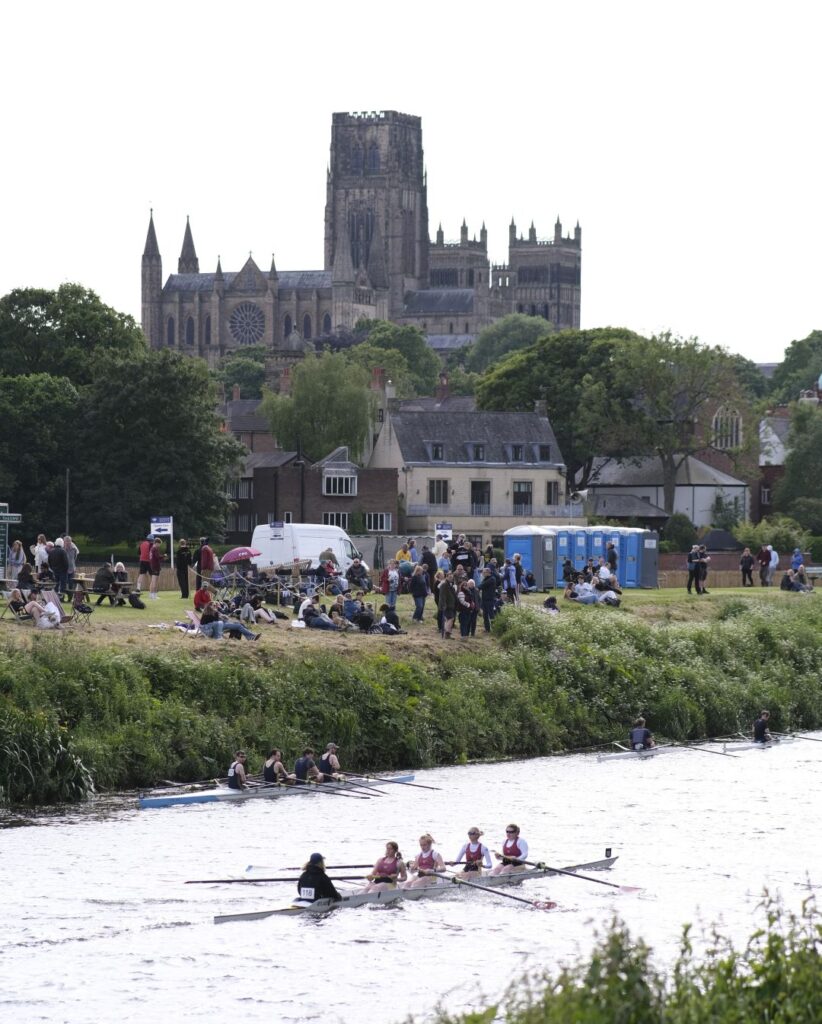
The warm weather makes for ideal rowing conditions after exams. You can hire traditional wooden rowing boats for a more casual experience, or if you are a keen rower, of course there are the University and college rowing teams. The Durham Regatta also takes place this time of year, in early June. Once again, I am not the sporty type – but it’s fun to watch!
Durham Regatta
Societies
During exams, societies usually slow down a little bit because everyone is studying. Theatre productions and shows come to a halt for those weeks and sports teams will train less or not at all. Once exams are over, it’s back to business and you can be as busy as you want to be. Last year, I took part in a 48 hour musical where we only had 2 days to audition, rehearse and perform. I played Gabriella in High School Musical and we raised lots of money for charity. This year, the theatre company that I am Vice President and Treasurer of is going to the Edinburgh Fringe Festival! I am so excited for those that are going and I’m sure they will do so well.
Chilling out
Whilst there are many events on offer, it is also important to take this time to relax and enjoy the lesser workload. You’re only a student for so long, and soon will come the time where ‘summer holidays’ don’t exist. It can be nice to wake up a little later, lay in a bit longer and just spend the day doing absolutely nothing. I like to take up a few more shifts at work now that I have more time and make a huge effort to spend time with friends. One of our favourite places to chill is the racecourse along the riverside. It’s also great to take this opportunity to go on day trips to Newcastle or Seaham, for example. My college is also offering free enrichment trips to Beamish and Whitby which should be fun!
Discover more
Follow The Durham Student on Instagram,TikTok and YouTube to see what life is really like at Durham.
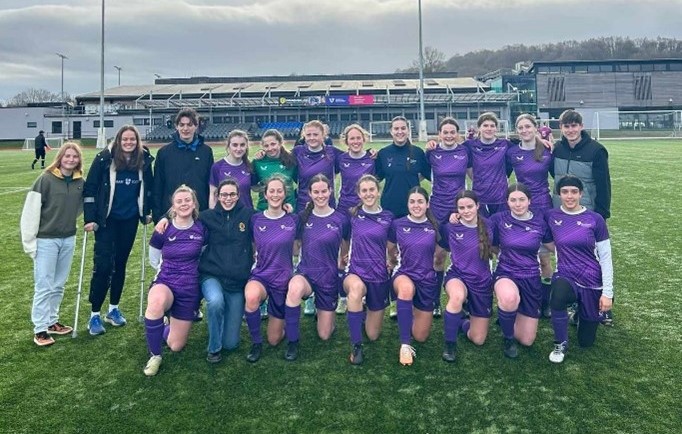
Hi, I’m Isabel a 3rd year student studying an integrated masters in Earth Sciences. For me sport is what has shaped my past 3 years at Durham university – from being captain of Collingwood Women’s football team, competing for Collingwood squash and rounders, to representing the university in touch rugby and Women’s football.
Why embrace sport at university?
Sport for me is one of the key reasons I love being a student at Durham. The opportunity to engage in a variety of sports activities—from playing football eight times a week, to bi-weekly squash and touch rugby, and even trying out lacrosse, ultimate frisbee, and mixed netball. Beyond just playing, sport has been where I have found my people; it’s how I’ve made most of my friends outside my course.
Durham university has two levels of sport, offering a vibrant and varied sporting environment no matter your level of expertise. From college sport where you have friendly intercollegiate leagues and cups that run throughout the year, to Durham university(‘DU’) sport where you get to travel the country on a BUCS Wednesday representing Durham against other Universities.
What’s unique about college sport at Durham?
As a student from Collingwood College, the array of sports and teams is staggering. Did you know that Collingwood College Football Club is the largest amateur football club in Europe, with 18 football teams (16 men’s and 2 women’s)? That’s not to mention the 9 netball teams, 5 hockey teams, and teams for squash, cheerleading, dance, and cricket, among others. Whether you’re into football, netball, rowing, or something a bit more niche, there’s likely a team waiting for you. As well as regular weekly fixtures, college teams also participate in Varsity weekends— fun and friendly competitions against other colleges, and universities such as York and Loughborough, which are always a fun day out with friends, filled with a bit of sport rivalry!
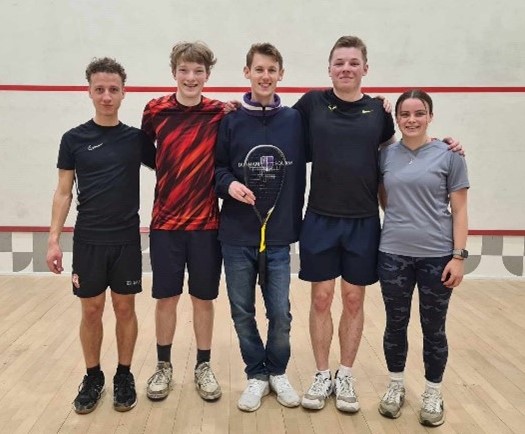
Collingwood squash
Exploring Durham University (DU) sports
In 2023, Durham was named Sports University of the Year by The Times, a testament to our strong sports culture, which has consistently placed us in the top three of the BUCS table since 2012. But it’s not just about the statistics – DU Sports caters from beginners to international-level athletes with professional support from sports psychologists, nutritionists, and regular strength and conditioning sessions at our state-of-the-art sports performance hub. I always say that being part of Team Durham makes me feel like being a professional athlete, a unique experience that complements my academic journey at Durham.
Sports: Not the only way to get involved
While sports have been my go-to for socialising and staying active, Durham offers a range of other ways to engage with campus life, from theatre and music to various societies and leadership roles. My advice to you? Don’t hesitate to step out of your comfort zone. The experiences that initially seemed daunting have turned out to be the most rewarding parts of my university life.
To summarise my waffle: whether you’re a seasoned athlete or someone looking to try something new, the sports scene at Durham offers something for everyone. It’s more than just games and competitions; it’s about building friendships, developing skills, and making unforgettable memories. So, why not give it a try? You might just find your passion or a new circle of friends waiting to welcome you.
Discover more
Follow The Durham Student on Instagram,TikTok and YouTube to see what life is really like at Durham.
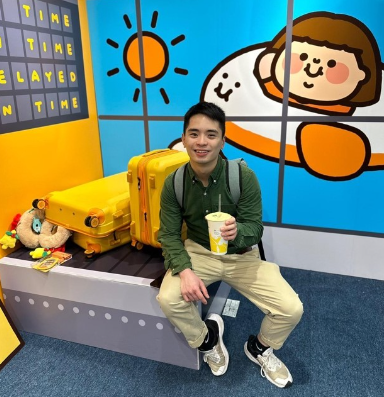
I am Christopher. I am a final-year student of 2022-2024 Master of Social Work (MSW) cohort in the Department of Sociology.
Currently, I am doing my final placement in Durham County Council hospital social work team east and social care direct team. Before joining the MSW programme, I worked in healthcare public affairs advocacy, breast cancer foundation and a banking industry secretariat for five years. Apart from the social work knowledge, skills and values nurtured from this programme, my strengths are media relations development, policy advocacy, event management, and account management of different banking and healthcare projects with a devoted attitude. My favourite subject to study is theories discussing issues around adult mental health.
Based on my previous working experience, I uncovered that social work is another profession to empower and to engage clients with healthcare needs from perspectives different from biomedical model. It could be a rewarding profession if I could receive their affirmation regarding my direct work with them, other than advocating for a policy change with them.
Before I came to Durham, I completed my undergraduate degree – Bachelor of Social Sciences (Major: Politics and Public Administration; Minor: Sociology) in the University of Hong Kong in 2016. I decided to study at Durham University because the ranking of this university is the highest based on different reports among all the British universities providing the MSW programme.
What I enjoy the most about my course is when we were discussing the theoretical knowledge in relation to social constructivism, social judgemental theory, social model of disability and biomedical model, the theories provided me chances to review my past events in different stages of life course. They also provided me contrasting perspectives to perceive the world with more lens.
In the future, I hope I could be an approved mental health professional after working in adults’ services for 2-3 years and completing the postgraduate diploma of approved mental health professional subsequently.
If you’re thinking about coming to Durham to study this course, please research about the placement and evaluate if you could complete your life tasks after working hours (8:30pm-5pm) during a total of 170 working day placements because you need to write reflections re placements, to prepare portfolio regarding your practice in both placements and to complete your assignments after working hours.
Lastly, think about which stream, adults’ or children’s services, would fit for your professional development before joining this programme, so that you could maximise your learning by choosing placement institutions offering relevant services in first and final year.
Discover more
Feeling inspired? Visit our Sociology webpages to learn more about studying with us.
College level sport at Durham allows students to get involved with sport at university at a more relaxed and less competitive level and often allows students to learn a sport from scratch. If college sport is something you want to get involved in, it’s important to consider the different sports facilities at different colleges.
Bailey colleges
The Bailey colleges are the older colleges at Durham, located in old townhouses (and a Castle!). This means that space is often limited. That doesn’t mean that students here don’t get involved with sport though. In fact, Hatfield and Castle have a dedicated day where they compete against each other in different sports! Many of the colleges will head over to the Maiden Castle fields (Sport & Wellbeing Park) to play sports like lacrosse, rugby, football and more! Indoor sports like badminton and volleyball are played inside Maiden Castle. The Sports & Wellbeing Park is only about a 15-minute walk from the Bailey, meaning if you want to get involved, the travel isn’t very strenuous. Other sports such as cheer vary from college to college, but a few of the Bailey cheer teams practice in the Hild Bede JCR. The intercollegiate cheer competition is still at Maiden Castle though.
Hill colleges
Hill colleges were founded later and so have a lot more space than Bailey colleges. Colleges such as Grey and Collingwood both have tennis courts for college use. While Mary’s and Stephenson have dedicated outdoor sports areas. Some sports at the hill colleges may still happen at Maiden Castle, especially if there are intercollegiate competitions. For example, floodlit matches, which are attended by the colleges competing, are also often held at Maiden Castle.
Which is better?
Even though hill colleges do have more on site sport facilities, the facilities used by the Bailey colleges are not far away and most people who engage in college sport will likely visit Maiden Castle at some point due to the intercollegiate competitions at Durham.
Most of the sports offered at colleges will also be the same, but it is worth looking at what is offered at each college if there is something specific you’re interested in. For example, Castle did not have a cheer team until this year!
Discover more
Follow The Durham Student on Instagram,TikTok and YouTube to see what life is really like at Durham.
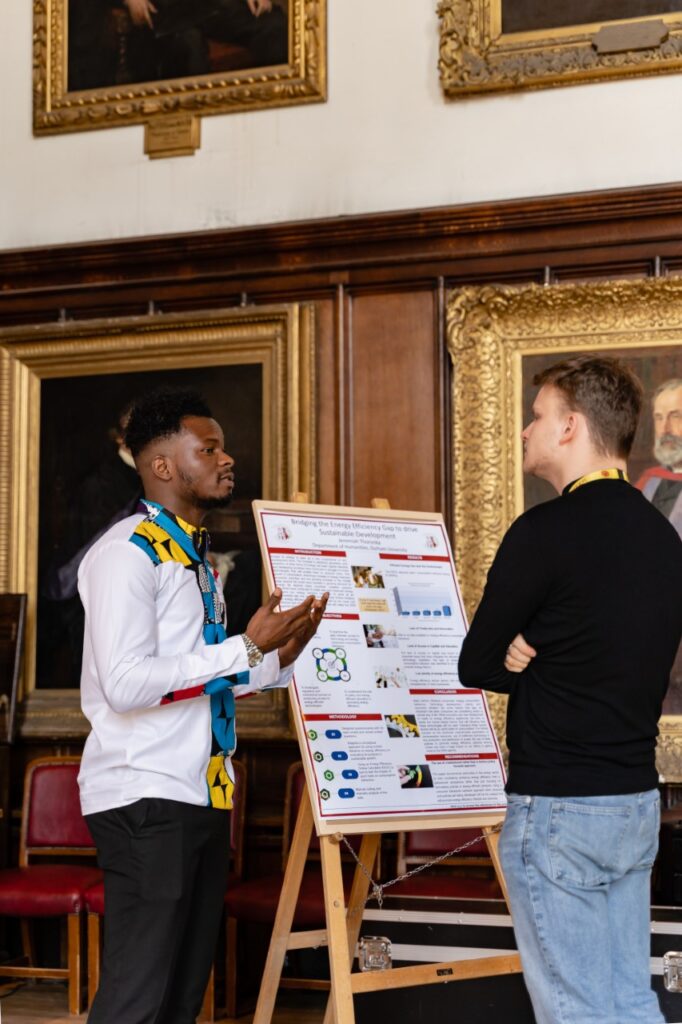
I’m thrilled to share that I’ve been selected for the Forbes Africa 30 Under 30 Class of 2024. This recognition symbolizes a milestone in my journey toward sustainable development, highlighting the dedication, resilience, and enthusiasm that have guided me.
At the core of my mission lies the goal of providing clean energy to underserved communities in Sierra Leone. I established Optim Energy, a forward-thinking startup that initially focused on utilizing piezoelectric devices to capture energy from the surroundings. Recently we’ve shifted our focus to implementing mini-grids with the aim of offering renewable energy solutions to off-grid communities enabling them to move from energy poverty towards sustainability.
How did the MSc in Sustainability, Energy, and Development programme help you get to where you are today?
My educational experience at Durham University as a Commonwealth Shared Scholar in the MSc Sustainability, Energy, and Development program was transformative. The program offered a comprehensive understanding of global challenges like climate change and inequality while stressing the value of local and indigenous knowledge. The interdisciplinary approach and top-notch research opportunities sharpened my skills and problem-solving abilities, significantly shaping my path.
Tell us about the award you won for a device you invented at Durham
During my time studying in the Department of Anthropology, I continued to refine a device I designed to generate energy which earned me a prestigious Inaugural Global Student Prize. I worked with a list of professors from the Department of Anthropology and Energy Institute to apply for and won the Seedcorn Grant to continue working on my solution.
The assistance I received from Durham University, the Department of Anthropology, the Durham Venture School, and the collaborative atmosphere enabled me to expand the horizons of my research. This resulted in the development of a solution to address energy scarcity. After refining my research, I pivoted to utilizing a mini-grid and implemented it within my local communities in Sierra Leone creating a significant impact.
Why are you so passionate about energy, climate change and sustainability?
My rooted passion for energy, climate change, and sustainability stems from my childhood experiences in Sierra Leone. Growing up in a displacement camp, I witnessed firsthand the devastating impacts of energy poverty and climate change. These experiences sparked a desire to seek solutions to enhance living conditions and safeguard the environment motivating me to establish Optim Energy and pursue further educational and research endeavors.
How does your work positively impact communities / the world around you?
Optim Energy’s ability to access energy has enhanced living standards, improved educational opportunities, and promoted socio-economic development. Our initiatives align with the Sustainable Development Goals such as affordable and clean energy, quality education, and climate action. By empowering communities with skills and educating them about climate issues, we enable them to utilize energy access to enhance their socio-status through entrepreneurship while realizing the social value of energy.
What advice would you give to a student thinking of studying in the Department of Anthropology at Durham?
I wholeheartedly recommend it. The interdisciplinary approach, supportive faculty and staff, and real-world impact opportunities make it an exceptional place to learn and grow. It is an enabling environment that enables you to engage deeply with the material, seek collaborative opportunities, and let your passion drive you. The skills and knowledge you gain will be invaluable in any path you choose.
Being named to the Forbes Africa 30 Under 30 is a remarkable honor, but it is just one step in my ongoing journey to make a difference in whatever I do. I am grateful for the world-class education and support I have received and am excited to continue working towards a sustainable future for all, ensuring no one is left behind. Thank you for reading, and I hope my story inspires you to pursue your passions and positively impact the world.
Discover more
Feeling inspired? Visit our Anthropology webpages for more information on our undergraduate and postgraduate programmes.
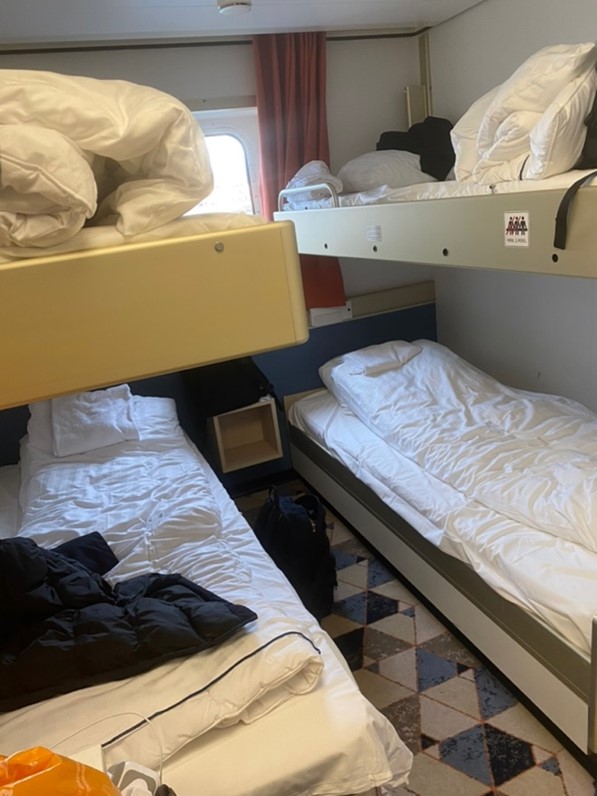
This diary begins on the Newcastle to Amsterdam ferry, where I am writing in our rather small cabin on the sixth deck. Having never been on an overnight ferry before, I must admit that the idea of sleeping in a small cabin whilst rocking on the water does feel a bit strange. However, I have come prepared with my sea sickness tablets, which seemed to have worked well so far, albeit the North Sea does seem fairly calm this evening. Most of our group seemed to have enjoyed the buffet on board the ferry, with plenty of options and different cuisines available. A particular highlight was the soft-serve ice cream that was available as a dessert – definitely pick vanilla over strawberry next time! The sea is fairly calm and I’m hoping I can get a good night’s sleep.
Friday
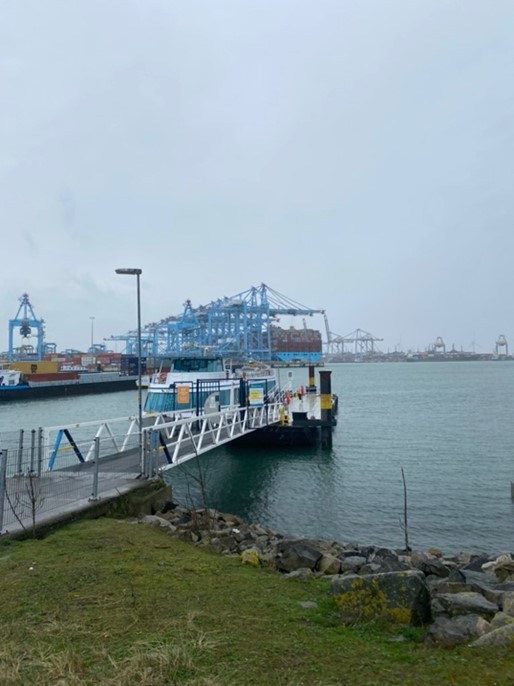
Today was jam-packed with activities! After waking up, my first realisation was that the sea was much choppier than the night before. After a hearty breakfast on board the ferry (with particularly nice bread!), accompanied by an extra sea sickness tablet, we finally arrived in Ijmuiden. Our coach met us at the ferry terminal, where we immediately made our way to the University of Technology at Delft. Here we visited the Green Village, where our guide talked us through the various innovations that had been developed for home and work spaces. However, for me, the highlight of the day was visiting the Port of Rotterdam, where we were taken on a tour of the port by boat. Our guide gave us information about the port and the functions of its different areas and was particularly useful in pointing out where the Porthos off-shore Carbon Capture Storage (CCS) project was located. A surprising sight at the port was the impressive HMS Prince of Wales aircraft carrier that was briefly visiting having come back from NATO exercises earlier in the month. After an exhausting day of events, we checked into our hostel, which had a quirky exterior design of yellow cubes tilting at different angles! The evening allowed us to explore the city somewhat, and a group settled for a pint (well, 500ml) of beer at one of the city centre’s many bars.
Our cabin on the ferryPort of Rotterdam
Saturday
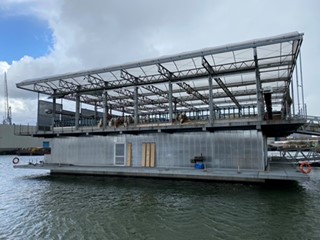
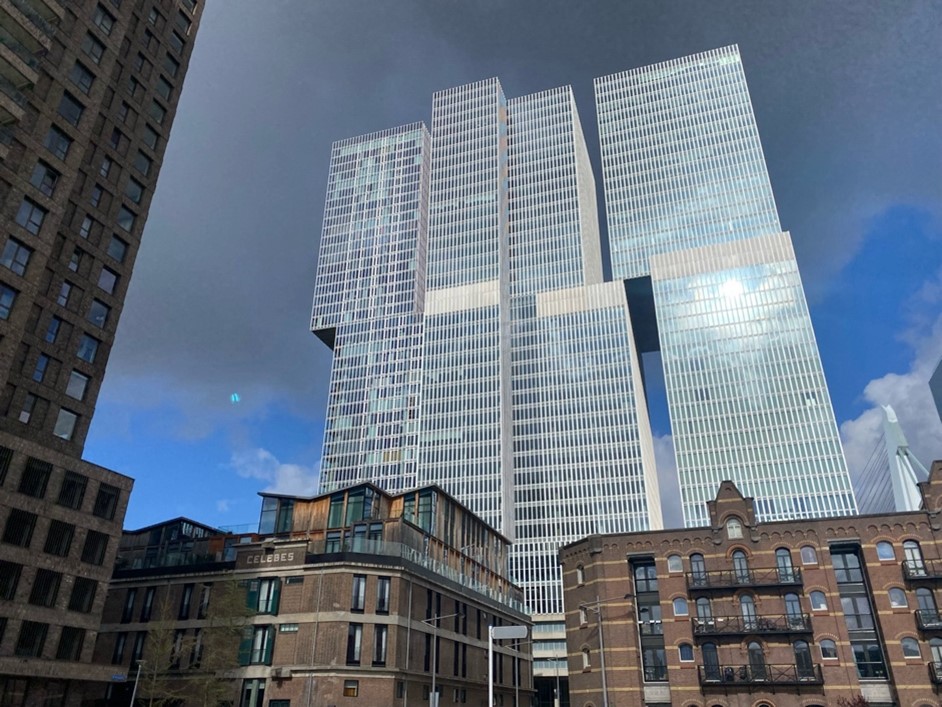
Our second day in Rotterdam began with a speedy breakfast as we dashed quickly off to the city’s unique mode of transport, the water taxi’s. These small yellow boats were really convenient at getting us right to the city centre, where we would meet our architect guide. During our tour we learnt more about the rather wacky architecture of the city, such as the Lego-esque De Rotterdam skyscrapers. Most of Rotterdam’s old historic centre was completely decimated by bombing during World War II, except for the Art Noveau Hotel New York, that once served as the departure point for Dutch emigrants heading to America. In my personal opinion, I haven’t been particularly fond of either the post-war brutalism nor the contemporary high-rises that make-up much of the city’s centre. Following our tour, we headed to the Maker’s District, where we given a talk by the volunteers at the Floating Farm, a self-sufficient farm built and floating on water that housed over 30 cattle at our time of visiting. Whilst it was an interesting concept, it did slightly feel like “tech for tech’s sake”, and some of our group questioned the ethics of housing over 30 cattle on a small grid beside the Port of Rotterdam. After a long-day, I went out for a bite to eat at one of the local burger restaurants, before settling down for the evening.
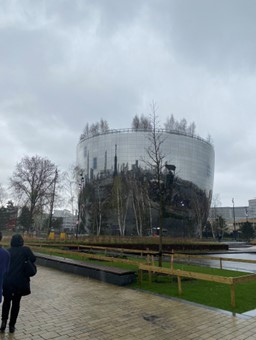
The floating farmThe famous “De Rotterdam” buildingA strange-looking building next to the Rotterdam architecture museum
Sunday
The day started more relaxed than the previous one as we headed leisurely towards Rotterdam’s architecture museum. The museum had a particularly interesting exhibition on Netherlands’ spatial planning, in which it displayed infographics of the past, present, and future plans for the Netherlands by architects and the government. In the afternoon, we split off into our project groups, with our group heading back to the central library right beside our hostel. With an interview with Porthos coming up the next day, we planned our line of questioning and divided responsibility for note-taking/asking questions. In the evening, we received a fascinating talk from an employee of Solar World, a company that provided small-scale solar energy solutions to neighbourhoods in Malawi and other African countries.
Monday
After an early breakfast at the hostel, we took a coach to TomatoWorld, a greenhouse and information centre funded by multiple different companies that develops innovative technology in the greenhouse tomato-growing sector. Entering the greenhouse was exactly like the feeling you get when stepping off a plane in a warm country, the temperature had risen about 10C to 15C! A particularly fascinating fact about TomatoWorld was that they utilised CO2 captured by industries in the Port of Rotterdam and fed it through pipes into the greenhouse to help the tomatoes grow. Following our tour at TomatoWorld, we briefly headed to the Innovation Dock, an old warehouse that was home to numerous projects, many of which were being carried out by students. However, our group left the warehouse early, as we needed to head on the metro across town to Porthos’ office in the north east of the city. We met our interviewees at Porthos, who spoke perfect English like everyone else in the Netherlands. They gave our group enlightening information about the role of CCS in the Netherlands’ energy and how the Porthos project came about. With our data gathered successfully, our group headed out to a pizza restaurant in Rotterdam to celebrate our findings.
Tuesday
After a hectic few days, today has been fairly chilled by comparison. Following a slow start, our group met downstairs in the hostel’s common area, which had plenty of workspaces. We started work on our presentation, designing the PowerPoint slides and writing scripts for the sections we had assigned ourselves. Some good news came at around lunchtime, as another company involved in the Porthos project, EBN, came back to us and said that they were available for an interview tomorrow. As their head office was in Utrecht, it meant seeing another city in the Netherlands! Our group had been slightly envious of the two groups studying urban mobilities, who had been to both Amsterdam and Utrecht in the last few days – but at least now we can also see a bit more of the country!
Wednesday
This morning we headed off on a train to Utrecht for our interview with EBN. Utrecht Central station was massive and really easy to navigate, and luckily EBN’s office was really nearby. Our interviewee was directly associated with the Porthos project and was particularly knowledgeable on the risks associated with the project and the technicalities of CCS. After our interview, we were able to explore Utrecht a bit more and find somewhere for lunch. The city was strikingly beautiful – with narrow streets and much more traditionally Dutch architecture. We found a really good Italian sandwich place selling huge cheese, salami and veg sandwiches for just €4! In the afternoon, we went to the university’s library, which we were able to enter as students. Something that I found very interesting was the amount of English being spoken by other students who were presumably studying at Utrecht University! We headed back to Rotterdam just before dinner, and as of the time of writing, have spent the evening working on the last touches of our presentation!
A great day spent in Utrecht
Thursday
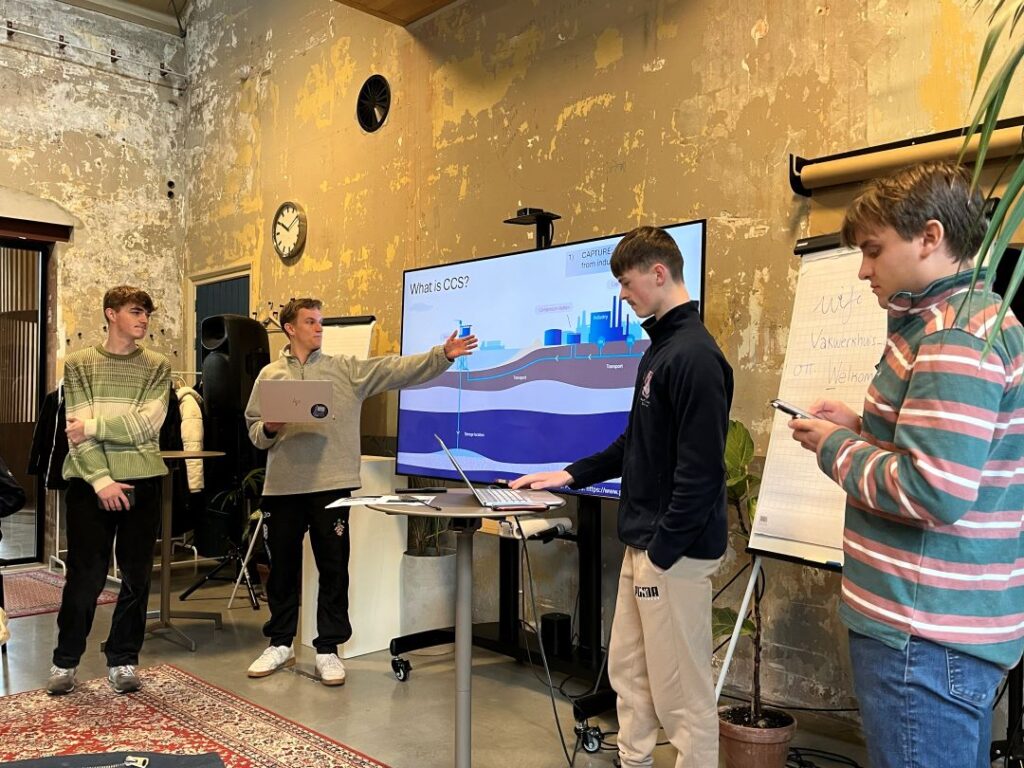
Our last day in the Netherlands! We headed this morning to where it all started, Delft, where we had booked a private room in a co-working space to conduct our presentations. We were up second, and I would be lying if I said I wasn’t a little nervous. However, our preparation from the last few days paid off massively, as we all finished thinking it had gone really well. I was impressed by the effort put in by the other groups as well, and particularly the clear and professional design of their PowerPoint slides. With the assessment out the way, we had a quick lunch at the co-working space, headed into Delft (another city with great architecture) for some snacks for the ferry and got on our coach back to IJmuiden. Although I was looking forward to getting back for some rest after a jam-packed trip in the Netherlands, I have to say that overall, the trip was great fun and I really enjoyed working with my team on our CCS project.
Discover more
See highlights from the field trip to Rotterdam here
I did my undergraduate in law back in India, and criminology was one of the subjects I found most interesting, which is why I chose to do an MSc in Criminology and Criminal Justice. I chose Durham University because it was one of the best universities for criminology in the UK. Also, what interested me was the way the course and specific modules were structured.
A change of pace
Although I was initially uneasy moving from a big city to a tiny, quiet town like Durham, I now find a change of pace to be quite lovely. Since then, I’ve grown to like taking leisurely strolls to and from classes while simply taking in the scenery which is also a bit refreshing. I was halfway through my first term when I finally got used to being on my own, acclimated to the temperature, and started interacting with people.
A different academic system
I found it a bit tough to adjust to the academic system at first because it is completely different. Here, we don’t have lectures every single day, and the lectures are also more like group discussions, where everyone is open to all sorts of opinions. This made me feel a bit confident in expressing my opinions in front of my peers.
The amount of reading that needed to be done was a bit daunting at first because, during my undergrad, my assessments were completely based on exams, and we didn’t have a dissertation. But here, you need to read articles and journals and provide critiques and arguments for them. I feel this let me delve much deeper into every topic that we studied.
The department
I feel the Sociology department has been very welcoming and supportive of the students, especially international students. They hold an informal social meeting every term where they check up on us and ask us about our experiences. They also make sure we tell them if there is anything they could do for us that they aren’t aware of so we can get the most out of our degree. One of the best aspects of the degree is that the professors are always willing to mentor and assist us, whether it be academically or otherwise.
Workshop at HMP DurhamFinchale PrioryRiver Wear from Kingsgate bridge
My favourite modules
The most interesting modules for me were the placement module and the Prisons, Crime and Justice module. As a part of the placement module, I get to volunteer as a mentor at the Durham Police and Crime Commissioners Office, which I feel gives me a good experience of what it’s like working with people and has also allowed me to make connections in my field. As a part of the Prisons, Crime and Justice module we had a workshop where we held group discussions with the prisoners at HMP Durham. I feel like this would be one of my most memorable experiences during my degree. This module was also a part of why I chose Durham for my master’s program.
College
Being an introvert, the collegiate system here gave me a chance to attend formal dinners and get to know people outside of my academics, making my social life a bit richer. Being away from my parents for the first time was not easy, but my college and the Student Union held a lot of cultural events for international students like me, which made me feel a little less homesick during festivals. Durham has provided me with a positive academic and social experience that I will always cherish.
When applying to Durham, I’m sure most of us were both intrigued and intimidated by the collegiate system. The endless hours spent binge-watching Jack Edwards created an idyllic expectation of the collegiate life. But what is the collegiate system? And how does it actually work?
Durham University is one of the very few UK Universities with a collegiate system, which is what makes us quite special. The collegiate system allows students the opportunity to find a community/family at Durham where they can meet students from all backgrounds, courses and degree levels. It makes the process of transitioning to university much easier as you’re constantly surrounded by people who understand you, and are going through a shared experience.
Which is why it’s important to understand the ins and outs of the collegiate system before diving in to university and college life.
How many colleges are there?
Durham University has 17 colleges all located across the City, the Bailey, and what’s known as the Hill (near main Science Site).
Hatfield {Bailey}
Castle (University College) {Bailey}
St Cuthbert’s Society {Bailey & Old Elvet}
St Chads {Bailey}
St Johns {Bailey}
St Hilde Bede {the main bulding is close to Gilesgate but the college community is moving to a new location in 2024 near the city centre due to refurbishments}
St Aidan’s {Hill}
Grey {Hill}
Trevelyan {Hill}
Ustinov (Postgraduate only college)
South {Hill}
John Snow {Hill}
Van Mildert {Hill}
Stephenson {Hill}
Josephine Butler {Hill}
Collingwood {Hill}
St Marys {Hill}
I’ve done my research, now what do I do?
Whether you’ve attended an open day, spent hours googling and searching social media for all there is to know about each college, the time has come for you to rank your college preferences. Also, the tricky part. Upon receiving an academic offer from Durham, you’ll be asked to rank 16 of the colleges according to your preference (1 as your first, 16 as your last). My biggest advice to incoming students is to take this process seriously, and to rank ALL 16 according to your preference properly and not just the first 3 or 6. Also, to properly do your research, whether that’s attending open days, speaking to ambassadors online or browsing through the social media pages. The most important thing to remember is, college preferences are not 100% guaranteed! The university will do its absolute best to allocate you your top preferred college, but that will not always be the case. Which is why it’s important you rank all colleges properly.
Preliminary allocation, allocation, and reallocation
Understanding the lingo of the collegiate system is integral, it avoids confusion, stress and anxiety during the allocation process. Fear not, I am here to break it down:
Preliminary Allocation- Once you rank all 16 colleges according to preference, you will be entered into the college allocation process, usually beginning in May. And will receive a preliminary allocation until results day. This allocation is NOT your final allocation, and is rather done in preparation for your final allocation.
Final Allocation– Once your place at Durham has been confirmed after results day, you will receive a final allocation. This allocation may be different to your preliminary allocation or for some not, but it is your final and confirmed allocation.
Reallocation– While incredibly stressful and unfortunate for some, reallocations do happen (not always!) when a college becomes oversubscribed, and yes, sometimes you are reallocated a college you were not expecting or to your delight, are reallocated a college you originally ranked higher. However, the University will always try its best to reallocate you to suitable or similar college to your preferences.
The most commonly asked question after preliminary allocation or final allocation is whether you can change your college if you are unhappy with the choice. The answer is situational. If your allocated college cannot provide for your medical or accessibility needs, then a request to change your college can be made. But, if it’s simply you not liking your college, then that is not grounds for a request to change your college and you cannot change your college based on that.
How does the allocation process actually work?
You’re probably wondering, are allocations first serve? Whether you firmed Durham? Well, the answer is quite complicated. The Allocation process takes into account various factors when allocating you a college and is an incredibly complex process and system to understand. Applicants are grouped into two categories:
Applicants who have filled out the preference form, ranking their colleges.
Applicants who have not ranked their college preferences.
Applicants from both categories will go through the allocation process until finally, a preliminary allocation is provided.
The allocation criteria take into consideration the required quota for each course in a college and your college rankings. Meaning, if a college is overly subscribed or you were not allocated your top choice, it probably means they’ve filled the required number of students from that course. You may think these criteria isn’t fair, but, it’s a necessary criterion as it allows for an equal and diverse mix of courses/course levels within each college; which makes the college experience and student life at colleges better for students 😊
What if I don’t get my first choice?!!
Yes, sometimes, you won’t be allocated your first choice, or your second or even 6th. But it’s important to know that whichever college you are allocated, you will end up loving and proudly defending when it comes to college rivalries and debates. Your first choice may be the one you wanted, but your allocated college will end up being the one you needed all along.
You’ll find an amazing community waiting for you at your college, regardless of whether it was your top choice or not, and you’ll have some amazing memories to look back on further down the years after you graduate 😊
Discover more
Find out more about the undergraduate college application process here
Our field trip began with a range of presentations about the culture, politics and history of Armenia. Developing a deep understanding of their historical and contemporary conflicts, we were given great insight into the current geopolitical position of Armenia. We looked at how the Armenian Genocide (1915), Soviet Union (1920-1990), and Nagorno-Karabakh conflicts (1988-2023) have shaped political and social life today. This provided strong foundations for our critical, analytical study of the legacy of the trauma of conflict in Armenia society today, and its consequence on different peace-keeping efforts.
We attended a number of lectures at both the American University of Armenia and the Russian-Armenian University. These lectures provided invaluable insight into the different academic opinions on the current Nagorno-Karabakh (NK) conflict from the first-hand perspective of Armenian scholars themselves. Both institutions produced frank, critical evaluations of their past and present government’s abilities to handle the conflict in NK. This gave us a unique insight into the local Armenian’s perception of their government and the conflict. They encouraged our questioning and challenging of different actors and narratives of the conflict.
We also met with a range of different actors from all levels of the peace-building process in Armenia. Seeing first the British Ambassador, we looked at the role Britain is playing in Armenia and the South Caucuses more generally. We saw that Britain is merely a peripheral actor, supporting the Armenian government in pursuing a policy of peace. This was complimented by our meeting with the Deputy Foreign Minister of Armenia, Vahan Kostanyan. We developed a great understanding of Armenia’s past and present foreign policy agendas. The government is moving towards a policy of diversification, looking west to reduce their dependence on Russia.
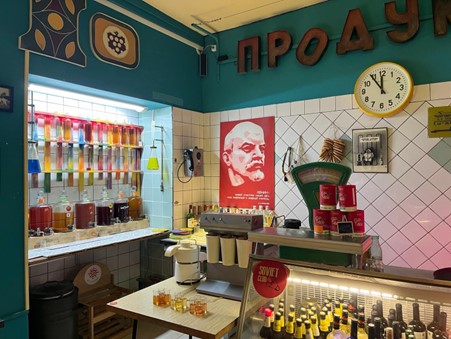
The Soviet Club
The way in which Soviet history is remembered in Armenia and their current and changing relationship with Russia became a reoccurring theme during our time in Armenia. From our dinner at the Soviet Club (a USSR themed museum, restaurant and nightclub), to the Vernisage market stalls of USSR memorabilia and our lectures at the Russian- Armenian University, it became apparent that Russia retains a strong place in Armenian society. However, the consistent line of the government and organisations remains that Armenia is and will continue to diversify their foreign policy, thus reducing their dependence on Russia whilst developing strong bonds with the West.
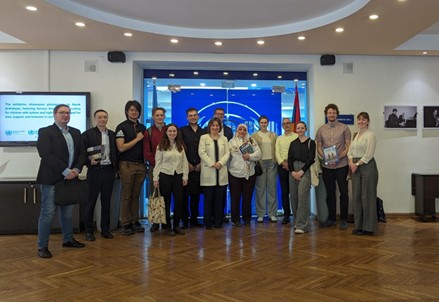
It was interesting to hear the different perspective and narratives which academics, politicians and diplomats were putting forward. Seeing how different actors framed the conflict reflected their different positions and interests. This was similarly apparent in our meetings with the Council of Europe (CoE) and the United Nations Development Programme (UNDP). Whilst speaking briefly of the conflict in NK, both organisations primarily spoke of their projects in Armenian society more generally. They are both working with the government and other organisations to improve equality and opportunities for women. Grounded in the CoE’s Istanbul Convention and the UN’s Women, Peace, and Security agenda, they have been working under conditions of protracted conflict to improve society more generally.
Our visit to the United Nations, meeting with Natia Natsvlishvili and Artak Ayunts
Other international humanitarian organisations such as the ICRC, as well as local grassroot groups we met (OxYGen and the Human Rights Research Centre Armenia) were similarly working on projects for refugees, women, and children. Their community-based work is essential in protecting some of the most vulnerable groups in Armenian society whilst working towards improving living conditions and equality within the country more generally. Their community-based work prioritises local people, with a strong focus on improving life for women. It was pleasing to see so many women in such high positions working within these organisations.
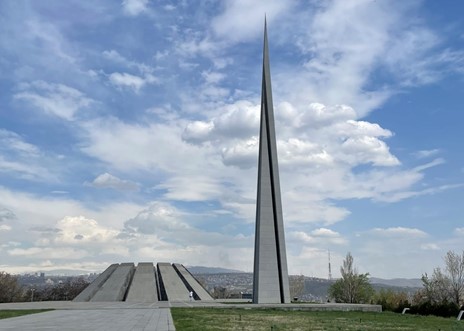
The Tsitsernakaberd Memorial Complex
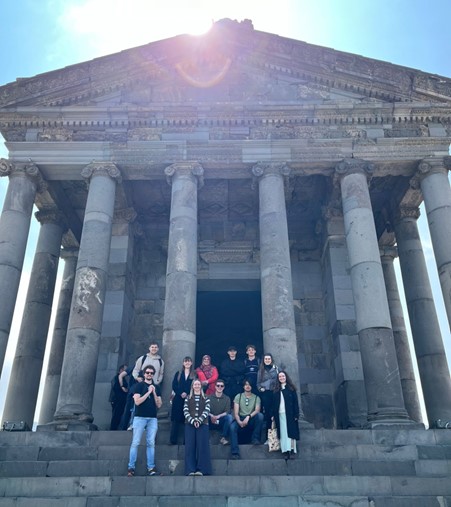
Finally, we visited the Tsitsernakaberd Genocide Memorial Complex and Museum. We felt the weight of the history of the Armenian Genocide in society today. The sharp, oppressive structure of the memorial contrasted sharply with the Memory/Fir Ally, a memorial of fir trees dedicated by different states and organisations which have acknowledged the genocide. This left us with a profound sense of the injustice the Armenians have faced throughout their recent history. Visiting their important religious and cultural sites (for example Garni, Geghard, and Lake Sevan) we were left with a deep and strong impression of Armenia. The people are proud of their country, culture, and history. They are a resilient nation and are strengthened by the conflicts they have faced and overcome.
We would like to extend our thanks to Dr Hakob Gabrielyan, our local connection for his enduring generosity, time, and help in coordinating our trip. As a previous graduate of DGSI’s Master’s Degree in Conflict Prevention and Peacebuilding, his local and theoretical knowledge were invaluable to helping us understand this beautiful and dynamic context. Thanks to Dr Marzieh Kouhi Esfahani for her exceptional knowledge of the South Caucuses which enhanced our understanding and questioning in so many ways. And to Dr William Plowright, for single-handedly orchestrating this entire trip. He enabled us to put our masters and all the knowledge with have gained this year into practice. It has been a unique and invaluable part of our degree, giving us a real taste of the work we hope to go into, inspiring us to pursue careers within the peacekeeping continuum.
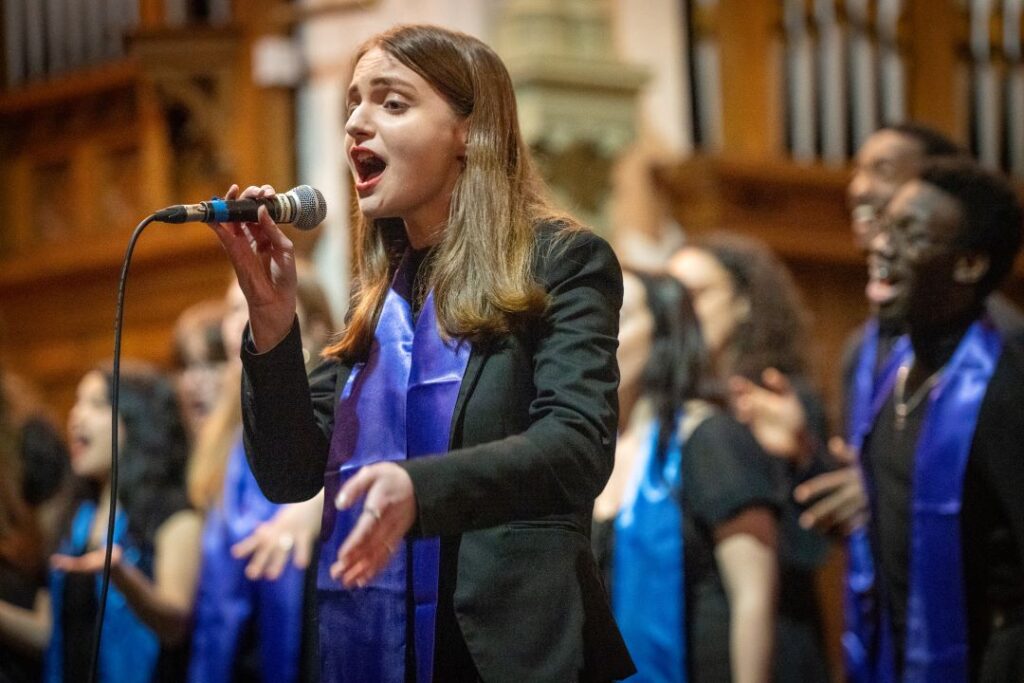
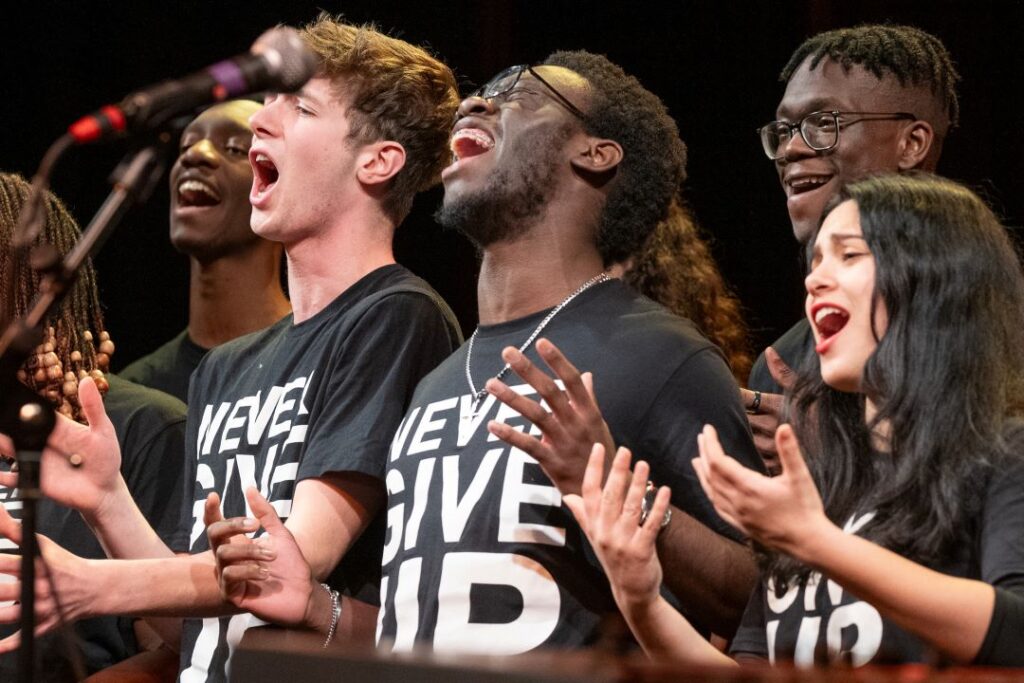
We began life in 2008 as a small group of singers busking on the streets of Durham. We’ve since grown to a choir of 30 students who love nothing more than to sing together, bringing joy to our audiences. This year, our aims have been to increase the confidence of our choir as individual musicians, to teach our audiences about the faith-based and anthropological heritage of the Gospel genre, and to build long-lasting relationships with other student-led Durham University music groups. The choir was founded to bring a different flavour to Durham, which we are told we have certainly done! We perform a diverse range of Christian worship songs, ancient African spirituals, more modern pop, and occasionally invite audiences to sing with us during performances. Gospel Choir is truly a family who want to see each other come alive through music.
What has been the Gospel Choir’s greatest achievement?
One of our proudest achievements was very recent – in April this year we were invited to perform in Durham Cathedral as an opening act for pop icon Heather Small. A technical delay at the last minute meant we didn’t get to open the show in the end, but we took the opportunity to take our energy and smiles, and perform outside the Cathedral to the crowds as they waited to go in.
We are also proud that we got through to the finals of University Gospel Choir of the Year 2024 in Croydon. This is always a huge highlight of our choir calendar, as we spend time with and draw inspiration from other choirs around the UK who have a wide variety of values, visions, and sounds. We received a lovely review following our performance: “Durham Gospel Choirgave a stunning close to the show, with beautiful tonal harmonies and arrangements, including some impressive a cappella work that set them apart from the rest of the choirs.”
Photo credit for Never Give Up – Jan Panke
Performing isn’t everything we do
While performing is undoubtedly important to us, it doesn’t represent everything about us. We’ve participated in a range of different events this year, including several gospel-style workshops with Hild Bede Chapel Choir before singing together for their Sunday services. This has entailed teaching lyrics and melodies to the Chapel Choir without sheet music, as well as belting workshops that train choir members to produce that signature powerful and soulful gospel sound.
We also like to help raise money for good causes, and this year our charity is Durham’s leading youth homelessness charity, Moving On. During a ‘Busk and Bake’ event in November in collaboration with St Mary’s Bake Society, we raised more than £200 for Moving On, while the proceeds of all programmes sold for our Michaelmas Showcase were also donated.
Tell us about the diversity that makes up the Choir?
Many Gospel Choir members are involved in jazz bands, pop bands, and often sing or play individually at events and open mic nights. There is also a significant number of choir members who are involved in church worship here in Durham and around the world. Some have experience in musical theatre, others have been more classically trained, and others still have grown up singing in church choirs. We are brought together by the sheer joy we have when we sing together; for some this is an act of worship, and for many others in our multi-worldview choir, the choir remains a relaxed and welcoming space.
Because Gospel music was born in African American communities, we as a choir are intentional about the ethnically diverse student community that we represent. Gospel Choir is an increasingly diverse and welcoming student community, with space for those of non-white heritage and backgrounds to flourish.
When can we next hear you perform?
We’re very active on Facebook and Instagram, where we advertise all events open to the public, circulate ticket links, and give our followers a glimpse into our rehearsals and behind-the-scenes.
We’re next performing in ‘Fairytales’ the annual Durham Student Music Cathedral Concert on Friday 31May. Get your tickets for here
We’re also performing at Ecofest in Neville’s Cross on Sunday 16 June.
There will be further choir showcases coming up later this year. Keep an eye out for more information!
Discover more
Radio interview between Gilly Hope (BBC Radio Newcastle), Georgie and Yikima ahead of the University Gospel Choir of the Year competition (which took place on Saturday 16 March). Listen here
Rehearsing ‘You’ve Got the Love’ – Florence and the Machine