Our field trip to Armenia

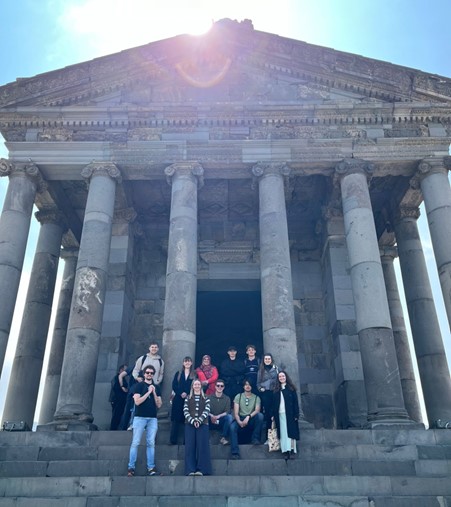
Our field trip began with a range of presentations about the culture, politics and history of Armenia. Developing a deep understanding of their historical and contemporary conflicts, we were given great insight into the current geopolitical position of Armenia. We looked at how the Armenian Genocide (1915), Soviet Union (1920-1990), and Nagorno-Karabakh conflicts (1988-2023) have shaped political and social life today. This provided strong foundations for our critical, analytical study of the legacy of the trauma of conflict in Armenia society today, and its consequence on different peace-keeping efforts.

We attended a number of lectures at both the American University of Armenia and the Russian-Armenian University. These lectures provided invaluable insight into the different academic opinions on the current Nagorno-Karabakh (NK) conflict from the first-hand perspective of Armenian scholars themselves. Both institutions produced frank, critical evaluations of their past and present government’s abilities to handle the conflict in NK. This gave us a unique insight into the local Armenian’s perception of their government and the conflict. They encouraged our questioning and challenging of different actors and narratives of the conflict. 

We also met with a range of different actors from all levels of the peace-building process in Armenia. Seeing first the British Ambassador, we looked at the role Britain is playing in Armenia and the South Caucuses more generally. We saw that Britain is merely a peripheral actor, supporting the Armenian government in pursuing a policy of peace. This was complimented by our meeting with the Deputy Foreign Minister of Armenia, Vahan Kostanyan. We developed a great understanding of Armenia’s past and present foreign policy agendas. The government is moving towards a policy of diversification, looking west to reduce their dependence on Russia.
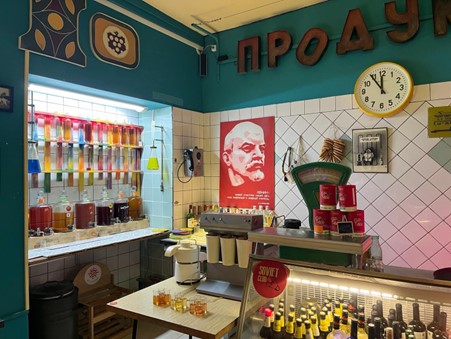
The Soviet Club

The way in which Soviet history is remembered in Armenia and their current and changing relationship with Russia became a reoccurring theme during our time in Armenia. From our dinner at the Soviet Club (a USSR themed museum, restaurant and nightclub), to the Vernisage market stalls of USSR memorabilia and our lectures at the Russian- Armenian University, it became apparent that Russia retains a strong place in Armenian society. However, the consistent line of the government and organisations remains that Armenia is and will continue to diversify their foreign policy, thus reducing their dependence on Russia whilst developing strong bonds with the West.

It was interesting to hear the different perspective and narratives which academics, politicians and diplomats were putting forward. Seeing how different actors framed the conflict reflected their different positions and interests. This was similarly apparent in our meetings with the Council of Europe (CoE) and the United Nations Development Programme (UNDP). Whilst speaking briefly of the conflict in NK, both organisations primarily spoke of their projects in Armenian society more generally. They are both working with the government and other organisations to improve equality and opportunities for women. Grounded in the CoE’s Istanbul Convention and the UN’s Women, Peace, and Security agenda, they have been working under conditions of protracted conflict to improve society more generally.
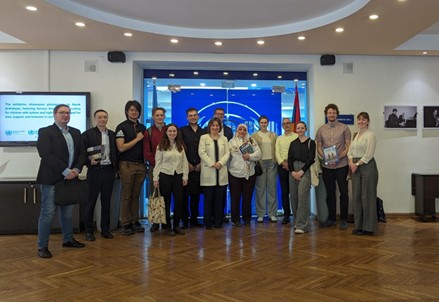
Our visit to the United Nations, meeting with Natia Natsvlishvili and Artak Ayunts

Other international humanitarian organisations such as the ICRC, as well as local grassroot groups we met (OxYGen and the Human Rights Research Centre Armenia) were similarly working on projects for refugees, women, and children. Their community-based work is essential in protecting some of the most vulnerable groups in Armenian society whilst working towards improving living conditions and equality within the country more generally. Their community-based work prioritises local people, with a strong focus on improving life for women. It was pleasing to see so many women in such high positions working within these organisations.
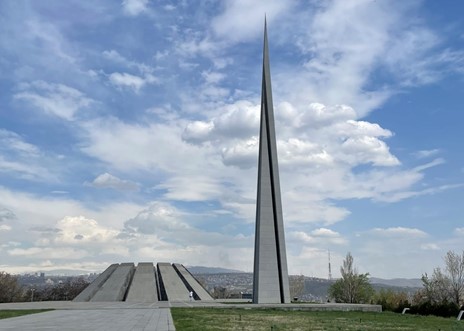
The Tsitsernakaberd Memorial Complex

Finally, we visited the Tsitsernakaberd Genocide Memorial Complex and Museum. We felt the weight of the history of the Armenian Genocide in society today. The sharp, oppressive structure of the memorial contrasted sharply with the Memory/Fir Ally, a memorial of fir trees dedicated by different states and organisations which have acknowledged the genocide. This left us with a profound sense of the injustice the Armenians have faced throughout their recent history. Visiting their important religious and cultural sites (for example Garni, Geghard, and Lake Sevan) we were left with a deep and strong impression of Armenia. The people are proud of their country, culture, and history. They are a resilient nation and are strengthened by the conflicts they have faced and overcome.  

We would like to extend our thanks to Dr Hakob Gabrielyan, our local connection for his enduring generosity, time, and help in coordinating our trip. As a previous graduate of DGSI’s Master’s Degree in Conflict Prevention and Peacebuilding, his local and theoretical knowledge were invaluable to helping us understand this beautiful and dynamic context. Thanks to Dr Marzieh Kouhi Esfahani for her exceptional knowledge of the South Caucuses which enhanced our understanding and questioning in so many ways. And to Dr William Plowright, for single-handedly orchestrating this entire trip. He enabled us to put our masters and all the knowledge with have gained this year into practice. It has been a unique and invaluable part of our degree, giving us a real taste of the work we hope to go into, inspiring us to pursue careers within the peacekeeping continuum.   

Discover more

Feeling inspired? Take a look at our School of Government and International Affairs webpages

For information about postgraduate courses at SGIA see here

Follow The Durham Student on Instagram, TikTok and YouTube

Create your own personalised prospectus here
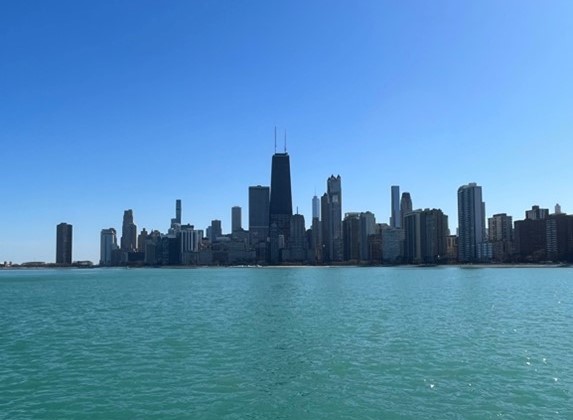
Geography field trip to Chicago

If you are seeking a field trip that offers real-time examples of geographical concepts, the chance to experience a variety of rich cultures all within just one city, plus some fun on the side then I would highly recommend choosing the module ‘Chicago: Sites of Global Change’. It’s not just about the field trip; the lectures and seminars over the whole year cover fascinating themes and scholarly insights which will enrich your overall learning experience.

Why choose a module that has a field trip?

Geography stands out as a subject because it provides field trips where you can witness first-hand the concepts you’ve been studying all year. These trips also offer opportunities to conduct research on topics that truly interest you, thereby enhancing both your knowledge and research abilities. Yet, perhaps the most significant aspect is the chance to meet fellow students from your course whom you may not have crossed paths with otherwise. Sharing ideas and exploring a new city or location together fosters quick and meaningful connections—I’ve certainly formed lifelong friendships during my trip to Chicago!

My fieldtrip diary

Tuesday

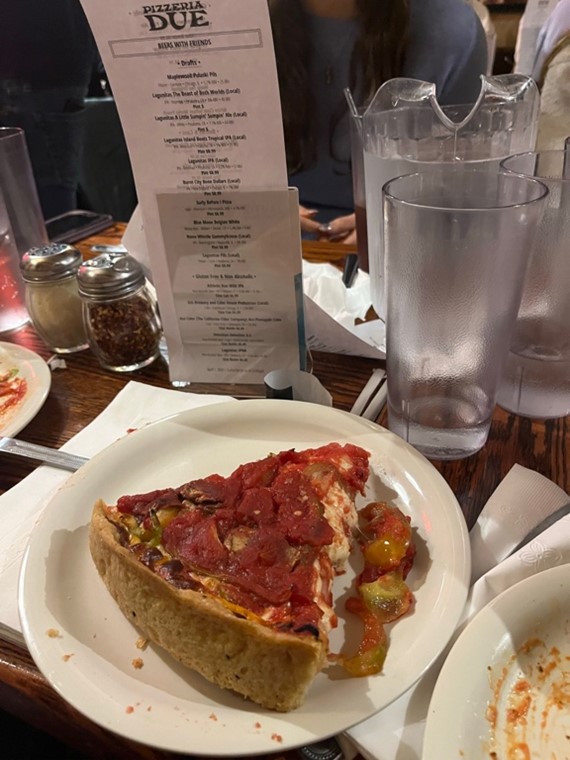
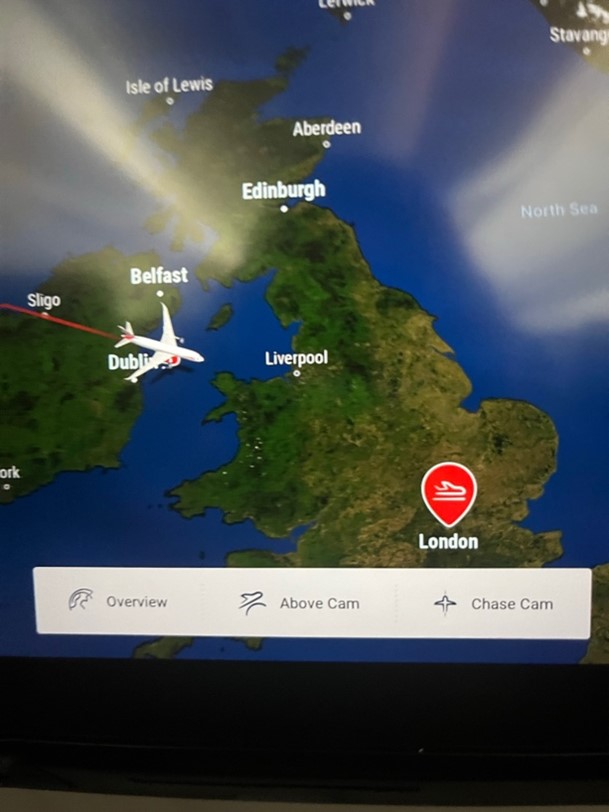
We got to Heathrow for our 11am flight just in time and checked in with our student registers, before making our way to Wetherspoons for our last English breakfast. The flight went very smoothly (the film selection was amazing) and we touched down in Chicago’s O’Hare Airport at around 4pm! We went directly to our hotel in the city centre passing American flags, McDonalds, and Targets on our way in. For our first night we had Chicago deep dish for the first time which had mixed reviews, but everyone managed to finish their huge portions of garlic bread, pasta and meatballs and thin crust pizza! After eating ourselves into a food coma we settled in our 4 bed dorm rooms (chosen by us) to try and sleep the jet lag off.

Then it was time for our first full day in Chicago! For our weeklong trip we had 3 days of activities that had been planned by our professors and teaching staff and then 4 days for our own individual research activities.

Wednesday

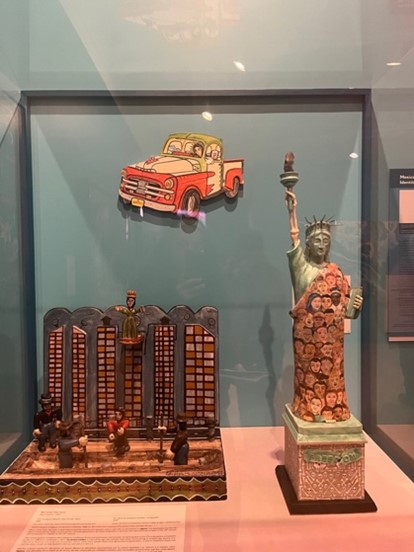
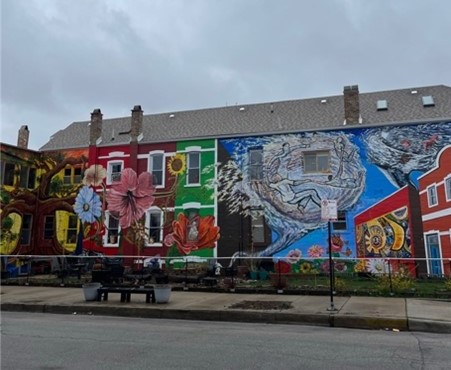
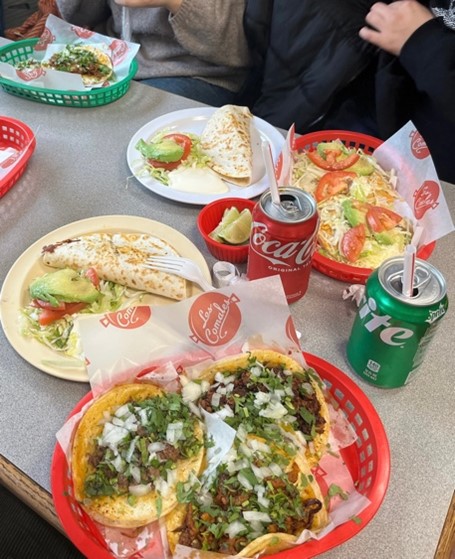
We started this day by getting on the ‘L’ which is Chicago’s public transit system, famous for being above the streets around the Loop (the centre of Chicago), eventually making it to Pilsen, a neighbourhood in the Lower West Side of Chicago. We had researched this area extensively in the module beforehand due to its unique rich Latino culture and beautiful murals, so being able to see it in real life was incredible. We got a guided tour of the National Museum of Mexican art before enjoying some authentic Mexican tacos and walking around the Pilsen neighbourhood which is becoming more and more gentrified. We even managed to stumble across the TV show ‘The Bear’ being filmed which was a highlight! We ended the day in Logan Square Library where we split into our groups, decided based on our research topics, to plan our own research days and get in touch with anyone in the city that we thought may be useful to speak to.

Thursday

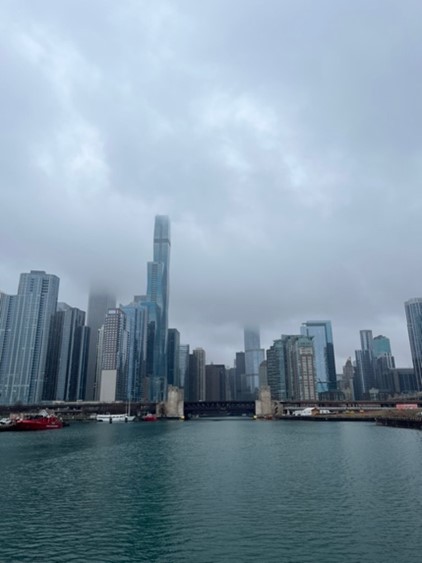
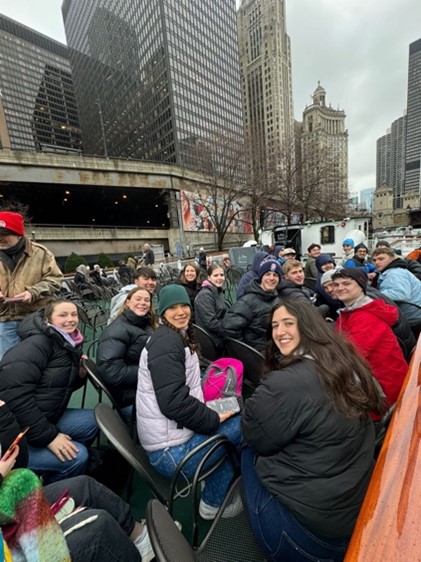
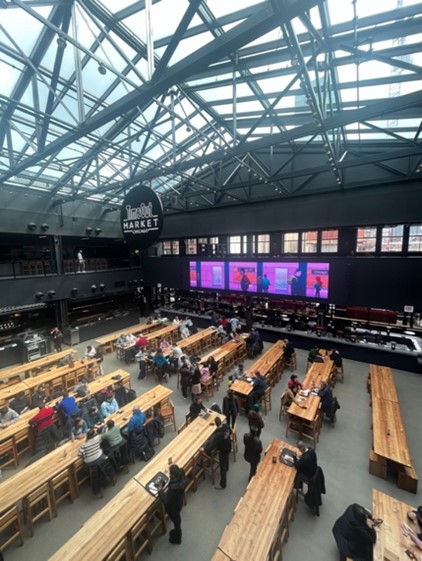
On Thursday, despite the rain and snow, we braved an open top boat tour which took us up and down the Chicago River with a tour guide who gave insights on the architecture and history of the most famous buildings in the city. We then got a tour (on foot), when it had stopped raining from Rachel Weber, a professor at University of Illinois Chicago (UIC) and author of the book “From Boom to Bubble: How Finance built the New Chicago”. A book which we had studied in the ‘Urban Governance and Neoliberal Chicago’ block of the module. Rachel gave us an updated version of her book with information on how the city’s downtown buildings were being utilized post-Covid. We ended the day with dinner at the famous Time Out market in Fulton Market where we got to speak to some UIC students about their own research.

Friday

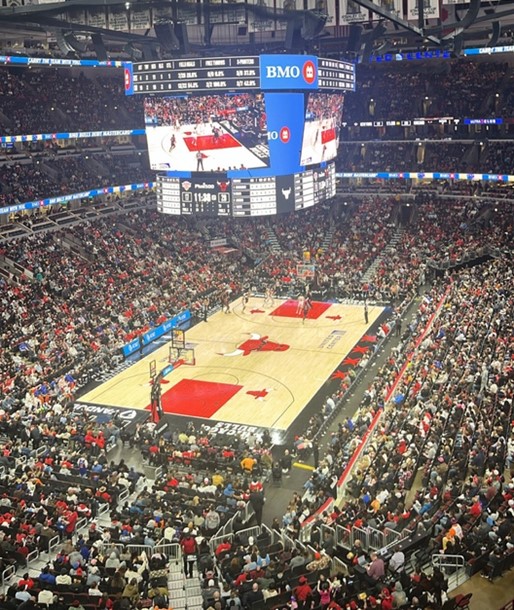
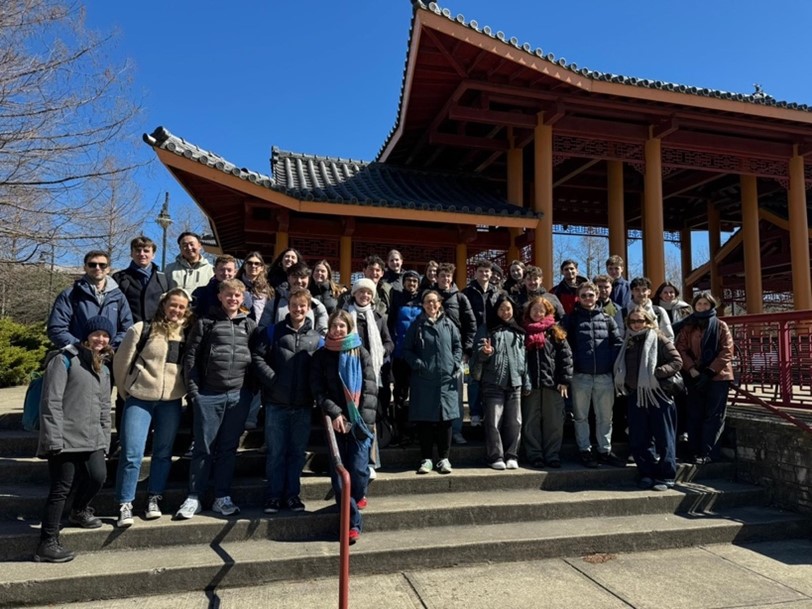
On the final day of our scheduled activities, we embarked on a tour of Chinatown, situated on Chicago’s south side. Our itinerary included a visit to the Chinese American Museum, which offered insights into Chinese American identity and the historical significance of Chinatown within the broader context of the city. We paused for lunch at an authentic Chinese restaurant, followed by some bubble tea, a first for some of us! We ended our day, by venturing to the magnificent Chicago Cultural Centre in the heart of the city, renowned for its striking architecture and hosting various art exhibitions and cultural events. In the evening, a handful of us fulfilled a long-standing dream by attending a Chicago Bulls basketball game – an unforgettable experience complete with energetic cheerleaders, spirited mascots, and t-shirt cannons!

Saturday, Sunday, Monday

Over the weekend and into Monday, we carried out our own research, making each individual day unique! My group and I got involved with a litter picking initiative in Pilsen and got to speak to members of the city council and locals. These conversations led to an invitation to visit the City Council building where we conducted an interview with the Director of Housing and Real Estate, directly contributing to our research objectives. We also explored Chicago’s prominent green spaces, observed the final stages of construction of the Obama Presidential Centre and received a tour of the University of Chicago from students themselves. Each evening, we congregated at a restaurant to discuss our research findings and seek guidance from the teaching staff. Throughout our days, we diligently recorded our observations in field notebooks, providing valuable material for further reflection in following days.

Remarkably, our visit coincided with the eclipse on Monday, April 8th, allowing us to witness the remarkable celestial event with special glasses, as the moon obscured 93.9% of the sun.

Tuesday

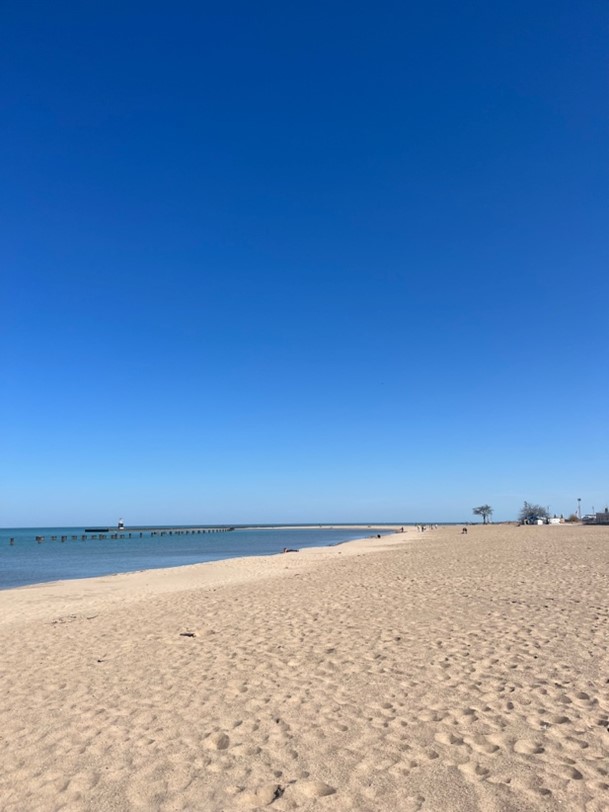
On our last day we had sunshine so before our 7-hour flight we decided to hit the beach and have a game of volleyball, tiring ourselves out before we started the long journey home.

Discover more

Feeling inspired? Take a look at our Geography Department webpages

Follow The Durham Student on Instagram, TikTok and YouTube

Create your own personalised prospectus here